Friday, October 12, 2018

Plastic

Find the podcast on iTunes, Stitcher, Spotify or via www,susbiz.biz
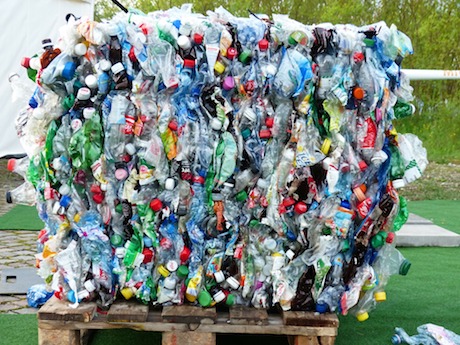

Hello and welcome to the Sustainable Futures Report for Friday, 12 October. This episode is going to be all about plastic, one of the wonders and one of the curses of modern life.
I’m Anthony Day and before we start let me thank my patrons for their continuing support. I'm delighted to say that the number of people accessing this podcast in September was by far the highest so far this year. I'm delighted to be reaching more and more people all over the world.
Before we Start
Before we talk about plastic, just a couple of news items which I picked up. 
IPCC
You’ll know that the IPCC report I spoke about last time has indeed been published this week, despite confusing messages on the IPCC website. “Global warming must not exceed 1.5C, warns landmark UN report”  I will look at it in detail for next time.
Fuel Duty
You probably heard, at least you may have if you're in the UK, that the government will freeze fuel duty at its current level for the ninth year in succession. That will mean that the Treasury has to find £800 million from somewhere else and of course there will be no effect on consumption or on emissions levels.
Flying Green?
On the other hand there is good news from Virgin Atlantic. This week the first commercial flight partly fuelled by recycled waste landed in the UK from Orlando, Florida. The flight’s fuel blend was 5% recycled, but the sustainable element could apparently form up to 50%.
It was produced in the US by LanzaTech, which claims it could eventually supply about 20% of the aviation industry’s fuel, and cut greenhouse gas emissions by 65% compared with conventional petroleum. Virgin is bidding for government support to have plants built in the UK that could fuel all its operations. 
Something like this is certainly going to have to be done if we are to continue with aviation and have any hope of meeting our emissions targets.
Stormy Weather
And then there is the weather. Another week of extreme weather events. British tourists killed by flash floods in Majorca. Residents in Florida and Georgia killed by Hurricane Michael, which even now is devastating the Carolinas. And this only a couple of weeks after Hurricane Florence.

And so to plastic. 
Plastic. Don't you love it, don't you hate it?
In this episode I want to look at all aspects of plastic. How it’s made, how it can be recycled, how we deal with waste plastic that’s been discarded, the consequences of all that waste and whether we can replace plastic with something that has all of its advantages and none of its problems. I’ll also talk about the BBC’s latest Drowning in Plastic documentary.
Wonder Product
In many ways plastic is a wonder product. It is used for so many things. Look around you and see if you can see anything that’s not made of plastic. Even things that are made of other materials may have plastic coatings or plastic fittings. Plastic is robust, waterproof and vapour proof, doesn’t rot and can be moulded or extruded into all sorts of shapes. Generally it’s very, very cheap - much cheaper than many other materials. Some plastic is rigid, some plastic is flexible. Some is transparent, some is opaque. Some plastics can stand the heat of an oven or the cool of a freezer, or both. It’s this resilience which is plastic’s downside. It’s extremely difficult to destroy. You’ve probably heard that every bit of plastic that’s ever been made still exists somewhere on earth, unless it’s been burnt. And an awful lot of it hasn’t been burnt.
Drowning in Plastic
First of all I’m going to talk about Drowning in Plastic, a BBC documentary presented by Liz Bonnin. You can find it on the BBC iPlayer.
Wildlife
This programme started with shearwater chicks. Young birds in Tasmania whose parents feed them with fragments of plastic believing they are food. Volunteers were desperately washing the stomachs of these birds and removing up to 200 plastic fragments from each. Plastic which ends up in the oceans is affecting wildlife and the food chain in at least three ways. Plastic fragments are mistake for food and the animals which ingest them not only risk damaging their insides but also suffer from malnutrition. These plastics may leach chemicals which can affect the animals and even prevent them from reproducing. Plastics may carry pathogens and as they drift with the breeze across the wide oceans they can carry epidemics and diseases rapidly and comprehensively. 
Microparticles
Some plastics degrade into microparticles while other plastics are already microparticles and are flushed down drains into rivers and out to sea. They come from synthetic fabrics when they are washed and they come from vehicle tyres as they gradually wear down. Microbeads have been used in toothpastes and facial scrubs and other cosmetics and they pass through all forms of sewage treatment and end up in the oceans. Like the particles that are caused by the degradation of plastic waste they can be absorbed by the very smallest organisms, krill for example, which is the main diet of some whales. The food chain therefore is affected from top to bottom. 
Gone Fishing
About 50% of plastic waste floating in the oceans is abandoned or lost fishing gear. Nets, lines, hooks and buoys. Birds, seals, turtles, even whales can become entangled in this debris from which they cannot release themselves. Harrowing scenes were shown of animals with gaping wounds. A line strangling a seal as it grew. And it's not just abandoned fishing tackle. Lines from lobster pots on the seabed to buoys on the surface trap whales as they make their way along their migration routes to the breeding grounds. Some lobster fisherman are keen to find a solution, but they are trapped in that their whole life and assets are invested in the fishing business and they can't afford to just stop. At least people are looking at possible alternatives including systems where the line is submerged with the lobster pot and not deployed until it's time to reel them in. 
Downriver
We saw how plastic is carried by rivers, in this case in Indonesia. In the world at large 2 billion people have no refuge disposal. Rubbish has always been burnt or chucked into the river. That's not a serious problem with organic materials like wood and plant matter. Organic materials are biodegradable. The plastics of course are not, it's one of their strengths. They float down the river and we saw scenes with whole estuaries choked with plastic from shore to shore. The fisherman do not fish there any more. The fish don't look very healthy at all. Instead the fishermen have become litter pickers and sort through the debris for what they can sell to recycling plants. Apart from plastic bottles and plastic bags, in the developing world consumers buy very much smaller quantities of tea or coffee or sugar or shampoo or soap. It all comes in individual plastic sachets which will add to the debris in the river. And once in the river it makes its way out to sea. You have probably heard of the great Pacific garbage patch. It's an area at three times the size of France full of plastic debris. That’s bad enough, but apparently there are five such garbage patches around the world. Plastic waste is found everywhere, even in the Arctic and at the deepest depths of the ocean. The message of the programme was clear, stark and quite disturbing.
The website linked to this BBC programme is much more limited than I’d hoped. It encourages us to tackle the plastics problem - specifically the single-use plastics problem - by making pledges such as to avoid plastic straws, carry a re-usable water bottle or coffee cup and to take your own container and cutlery for a takeaway. Yes, it’s a start. The link also leads us to the BBC’s Plastics Watch initiative in partnership with the Open University, which has a much broader range of information.
Taking Action
Like most sustainability issues, plastic pollution has no simple solutions and solutions can have unintended consequences. Take plastic drinking straws, an example of a single-use plastic product which may have a useful life of 20 minutes or less. Why don’t we just ban them? Well first of all that would remove something that some disabled people rely on. Give them a paper straw instead! But paper straws can be even more environmentally damaging than plastic straws, although in a different way. And paper straws can collapse more easily, especially if the liquid is hot. Mind you, if plastic straws are exposed to heat they can release toxins. Some paper straws can leach ink if they are used for hot liquids, some may contain plastics to prevent them from collapsing and some may involve harmful chemicals in the manufacturing process. The best paper straws have none of these drawbacks and decompose in 30-60 days. Usually, they are more expensive than plastic straws. Americans use 500 million drinking straws every day, mainly plastic.That’s an average rate of 1.6 straws per person per day. In the UK we use rather less, at around 8.5bn per year or 23m per day: less than half a straw per person per day. (0.383) The global total is unclear, but it’s a lot. At least it’s a lot of straws, but it’s not a lot of plastic. It’s estimated that about 2,000 tonnes of plastic straws end up in the ocean annually, but that’s a very small proportion of the 9m tonnes of plastic which ends up in the sea in total. So please do refuse a plastic straw, but there’s much more to be done, and no straw at all is probably the best solution. If you must have a straw stainless steel straws are available - that’s the material that cutlery is made of. Amnesty’s Christmas catalogue offers bamboo straws, which come with a cleaning brush.
Taking Back Control
We need to go a lot further in controlling plastic. If we don’t cut the production of plastic we will always be fighting a losing battle, but the versatility of plastic makes it extremely difficult to replace.  The Waste and Resources Action Programme (which operates as WRAP) is a registered UK Charity. On their website, which covers the whole range of waste, not just plastic, you will find information about the different types of plastic and about plastic recycling. They talk about designing products with recycling in mind, which takes us back to what we were saying about the circular economy a few weeks ago.
Number please
Recycling has a long way to go. Most plastic products carry a number in the centre of a triangle of arrows. This identifies the type of plastic and therefore the appropriate method of recycling. There are seven different types, but only 1 and 2, PET and HDPE, polyethylene terephthalate and High Density Polyethylene, are currently collected from domestic premises for recycling. The problem with recycling is a financial one. Recycling requires a reverse supply chain - to return the used bottle or bag or tray to a recycling point. Then the items need to be sorted so that one type of plastic is not contaminated by another. Items may need to be washed to get rid of food residues, for example, which could also contaminate the recycling process. The recycling itself may involve the use of chemicals and will certainly require energy. All these stages have a cost, so the big question is whether it makes more sense just to make something new from fresh raw materials. 
Tax or Subsidy?
Maybe governments should put taxes on new products or offer subsidies for recycling. The problem there is that taxation will be passed on as an extra cost to the consumer and subsidies will be paid for by the taxpayer. Either taxation or subsidies might change the producers’ behaviour and could then be phased out, but this will only happen if there is a cost-effective alternative to plastic. Is it cost-effective to send ships to collect the plastic waste gathered far out to sea by those booms floating in the oceanic garbage patches? Is there a demand for it as a raw material? 
The Chinese Solution
For many years we in the UK shipped plastic waste to China. We buy a lot of consumer goods from China. The containers were going back empty so it made sense to fill them with scrap plastic so that it could be used as a raw material. A couple of months ago China decided that it no longer needed to import scrap plastic and imports will cease from 31st December this year. The UK is one of the countries which relies on China as a destination for this material and therefore has not built domestic recycling capacity. Some people in the industry see China’s action as a disaster; others see it as an opportunity. Either way there is going to be some stockpiling because recycling plants cannot be built overnight.
Good News
This is a superficial review of a wide and complex issue and one which I am sure we will return to. At least it's all not all bad news, so here are some examples of good things which people are doing.
Cleaning up at sea
I mentioned a while ago that a floating boom has been developed which is carried by the wind across the oceans’ garbage patches. It’s slowed by sea anchors so that the faster-drifting plastic debris accumulates behind it. Concentrating the rubbish in one place like this means that it can be more easily collected and taken away for recycling. The BBC programme reported on this, and also another machine which removes plastic from rivers. It’s driven by a water wheel which is powered by the flow of the river.
Eating your rubbish
And edible plastics are being developed. The Fast Company reports that after you finish a cocktail in a new type of glass, you can eat the cup. “Loliware, which is made from a base of seaweed and comes in flavors like yuzu citrus or matcha tea, is designed to replace disposable cups at parties that would normally end up in the trash.” If you don’t eat it, the cup can be composted. Unfortunately Loliware’s website carries the message “Back soon”. 
Other edible cups are available.  Reuters tells us of Jakarta food and beverages retailer Ong Tek Tjan who sells ice cream in cups his customers can eat afterwards, instead of throwing away - they are made from seaweed and taste like jelly, in flavors from peppermint to green tea.
I seem to remember reporting a while ago on drinks distributed in edible plastic wrapping. My only question with all these products is “Don’t you need to wrap them in something to keep them clean?”
Cleaning up at the supermarket
Morrison’s supermarkets in the UK are giving up plastic bags for fruit and vegetables and offering paper bags instead. Let’s hope that no noxious chemicals are used in the production of the paper. Morrisons will also allow you to bring your own container to collect your meat. (Meat, yes that’s another controversial issue. We may look at that next week.) Morrisons have introduced reverse vending machines and Tesco have announced that they will introduce them as well. We covered them a while ago. It’s a machine which accepts your glass, plastic and aluminium containers, sorts them into separate bins automatically and gives you a voucher for your trouble.
Types of Plastic
Costing a Packet
Walkers Crisps (that’s potato crisps or what you might call potato chips) have undertaken to recycle their packets and are setting up collection points. This follows a popular campaign against the brand when people realised how many packets were thrown away every day and just how difficult they are to recycle. They used the company’s Freepost address to send back the empty packets in such numbers that the Post Office complained. Of course, once again there are two sides to the story. The plasticised foil packet which replaced the traditional paper crisp packet some years ago revolutionised the industry. The new packet keeps the crisps crisp and fresh for much longer, and doesn’t have to be stored out of the light like the old ones did. Finding a more acceptable alternative will be challenging.
Leeds by Example
In Leeds, West Yorkshire, a new campaign called Leeds by example has just been launched.
Environmental charity Hubbub has teamed up with Leeds City Council, Coca-Cola, Shell, McDonald's, and others to boost recycling of plastic bottles and coffee cups
A host of major brands have joined an initiative aimed at improving on-the-go recycling options in the centre of Leeds, where recycling reward machines, 'bubble-blowing' bins, and recycling collection bikes are being rolled out.
The 'Leeds by Example' campaign is aimed at providing consumers with a means of recycling plastic bottles, drinks cans, coffee cups, and other packaging from goods consumed while out on the streets or in public places.
Consumers currently get through 13 billion plastic bottles, nine billion drinks cans, and 2.5 billion coffee cups each year, yet the rate of recycling when on-the-go in the UK remains low, according to environmental charity Hubbub, which is leading the initiative.
At present, only 42 per cent of local authorities provide on-the-go recycling facilities in the UK, while there remains widespread confusion among the public over what can be recycled, Hubbub explained.
As a result, the charity has brought together 23 major brands for the six-month trial initiative launching in Leeds, which will see new recycling facilities deployed for plastic, cans, and paper cups on the streets and in local offices, universities, shopping centres, and transport hubs.
Run in conjunction with Leeds City Council, the results of the six-month trial will be shared with a view to rolling out the most successful elements of the campaign nationwide in the future.
The initiative will also see the first UK trial of the 'We-Recycle' phone app.
The app uses barcodes and labelling on soft drinks packaging and coffee cups to provide clear, cross-brand help for people on what and how to recycle, with a map to find their nearest recycling points.
James Piper, managing director of recycling compliance scheme Ecosurety, explained that contamination from food and drink has previously been a major challenge for efforts to improve on-street recycling. "The communications campaign running alongside the new recycling facilities is a critical part of #LeedsByExample and we hope this will dramatically reduce the level of contamination so that more of the waste collected can be recycled," he said.
There’s a link to all this on the blog. Much better than the link you get if you google Leeds by example - all you get is an unfinished page.

And that’s it
And that’s it for another week. Apologies to Patrons who did not get the Sustainable Futures Report early this time. I normally publish at 01.00am on a Friday morning and it’s currently about 10 o’clock on Thursday night [at the time of recording] and I’m still putting it together. And I’ve driven 250 miles today. Anyway..

I’m Anthony Day.
That was the Sustainable Futures Report.
There will be another one next week.

Good night.

Friday, October 05, 2018

Feedback

Find the podcast on iTunes, Stitcher, Spotify or via www,susbiz.biz

Yes, as promised, here's another episode of the Sustainable Futures Report. I’m Anthony Day and unless you’re a patron and you're getting this early, it's Friday, 5 October 2018. Thanks first of all to everybody for their feedback. I've had more feedback than ever this week and I'll try and develop some of the ideas which you've shared.
In this week’s episode
In this week’s episode, climate failures and climate lies, a big price for small reactors, don't paint the town red – paint it green, and how should we keep it warm? News from Smart Cities World, from the IPCC and a follow-up on some of the issues covered last time.
Plastic Next Week
This week there was a major BBC documentary on plastic waste. I'm going to cover the whole issue of plastic in the next episode. For the moment you will be able to pick up the programme on the BBC iPlayer if you are in the UK and there is more at BBC.co.uk/plasticsaction
New Patron
And now, a very warm welcome to our newest patron, Shane. Yes another one! Shane says he was looking for a podcast that covers green living and environmental issues. I hope we measure up, Shane. Shane’s a Cyber Security student and privacy advocate, and says that the episode on Smart Meters was really interesting and made him aware of some of the downsides he had not thought of. He mentioned  the 'Amazon Echo' and 'Google Home' devices that are always listening and gathering lots of data. Yes; won’t have one of those in our house, Shane.
Feedback
Feedback also came this week from Tom de Simone, our new gold patron I told you about last week. He says, “I think heating is the one that's most playing on my mind at the moment, as we don't seem to be making very much progress in that area. Passivhaus is all good and well, but we need to do something about the existing houses out there, and most people are not able or willing to do a whole house retrofit. We need something that's less severe than retrofit, but still improves the insulation properties of the house to a reasonable degree.” He says he’s looking for an online discussion group to explore the issue. There surely must be discussion groups out there for improving domestic insulation. If you know of one, let me know via mail@anthony-day.com and I’ll pass the word along. This podcast is heard from Australia to Canada and from Belgium to Brazil, so I’m sure there’s someone listening with opinions and ideas about this.
Do Nation
Katerina Robinson is a long-time listener to the Sustainable Futures Report - Hi Katerina - and she pointed me to Do Nation. “At Do Nation,” the website tells us, “we help people commit to make small behaviour changes that add up to a better world. Like cycling to work, driving more efficiently, eating less meat or turning the thermostat down a notch.
You can either make a pledge yourself, or start a campaign - at home or at work - to raise pledges from friends, family and colleagues.”
Groups can be set up in businesses, universities and other organisations. According to DoNation’s website, one couple asked well-wishers to make pledges instead of sending wedding gifts. Do Nation sets up a web page for each group, calculates the carbon savings resulting from people meeting their pledges and creates a leaderboard to keep people focused and motivated. There’s an app which keeps you up to date.  
Katerina has set up such a group at Freedom Group, where she is Group Environmental Sustainability Manager.
News on Climate Change
This week The Guardian reported on climate change failures, but urged us all not to give up. They said that the world was failing to combat the threat of climate change. Global carbon dioxide emissions from coal, oil and gas increased by 1.6% in 2017, after three years when they rose little or not at all. Demand for oil is increasing by around 1.5% a year. They mentioned how protesters against fracking in the UK have been locked up for opposing a process which they see as dangerously irresponsible.
This week the IPCC is discussing its special report on the impacts of global warming of 1.5 °C above pre-industrial levels at its 48th Plenary in Korea. The text is not yet available. The Guardian says it will be available this week but the timeline on the ipcc website seems to indicate that it may not come out until next year. Incidentally I was invited to debate it on Talk Radio with Piers Corbyn on Monday night. I declined because they gave me less than an hour’s notice and I didn’t know what it was about. I still don’t, but the Guardian’s man has been talking to one of the report’s authors. 
“It’s extraordinarily challenging to get to the 1.5C target and we are nowhere near on track to doing that,” said Drew Shindell, a Duke University climate scientist and a co-author of the Intergovernmental Panel on Climate Change report…
“While it’s technically possible, it’s extremely improbable, absent a real sea change in the way we evaluate risk. We are nowhere near that.”
If the report is published this week I will track it down and let you know.
You can read the full Guardian articles on line: the link is on the blog at sustainablefutures.report. There’s a link to the IPCC site as well.

Down under, but not really down
Can you believe a word of what politicians say? No, I'm not talking about people who may or may not be addressing the Conservative party conference which is on this week. This story relates to Australia where the new energy minister claims that the country is on track to meet its 2030 emissions targets.
The New Daily tells us that energy minister Angus Taylor made a claim about carbon emissions this week that looked on the surface to be fantastic news, but on closer inspection was false.
The minister wrote in the Australian Financial Review: “Emissions reductions are the least of our problems, with every prospect we will reach the 26 per cent reduction below 2005 levels ahead of schedule and without interventions.”
According to Mr Taylor’s own department, Australia is on track to woefully miss the 2030 target, and will reduce emissions by just 5%, not 26%.
The minister’s office then said that he had been talking just about electricity, not all energy, but the Energy Council said that was incorrect as well.
The minister’s office did not respond when this was pointed out.
If you read the original headline it appears that all is going well with Australia’s emissions reductions. The truth is that the new Morrison government has scrapped the National Energy Guarantee (NEG), which would have forced energy generators to limit their emissions and has made it clear it will not replace it with anything. The Energy Council says that without regulation there is no hope of meeting Australia’s Paris targets.
Thank goodness we know that we can trust everything our politicians here in the UK have to say.
More on the Energy Front
I'm in danger of falling out with my community energy friends by suggesting that nuclear power might be a good idea. No, not white elephants like Hinkley C, but modular nuclear power stations which could be housed in a container at the end of our street. Well, no, perhaps not in the middle of a residential area but perhaps on the local industrial estate. Mini nuclear generators have been used for decades to power nuclear submarines and sailors have been living in close proximity for all that time without adverse effects. Rolls Royce is a world leader in this technology. If these units are cheap, simple and totally emission free in use surely they are preferable to burning imported gas, coal or wood chip. But a recent news report makes me think again. And neighbourhood nuclear would probably receive the same warm welcome as fracking.
In January the government set up the Expert Finance Working Group on Small Nuclear Reactors, which reported recently. It recommends that the private sector should aim to develop first-of-a-kind small reactor projects and that the taxpayer should take the financial risk. At this stage we’re talking about some £2.5bn, for projects to be delivered by around 2030. By which time renewables and battery technology will be widely installed and will have the benefit of another 12 years’ development.
The report says:
“HMG’s actions could build on the momentum, trust and confidence created by large nuclear such as Hinkley Point C” 
‘Nuff said I think.
Free speech?
Last time I reported that in the face of serious doubts about the financial viability of fracking the British government was still determined to promote it. In England at least, although it’s banned in Scotland and Wales. Equally there are those who are implacably opposed to it, because of the risks of contaminating groundwater and the risks from methane leaks from the production sites which could make the gas produced from fracking dirtier in terms of overall emissions, than coal. Some of these people have been sent to prison for their actions to disrupt the operations of the drilling company. Many people see this as a denial of free speech. It’s apparently the first time people have been sent to prison for this sort of protest since the mass trespass on Kinder Scout 82 years ago.
More drilling
Meanwhile six days after parliament went into recess for the party conference season Energy and Clean Growth minister Claire Perry announced that Cuadrilla will be allowed to frack a second well at its Preston New Road site. Some 20 Conservative MPs are known to oppose this but of course have no way of doing anything about it while Parliament is in recess. The government has already taken such decisions away from local authorities. 38 degrees and the Campaign to Protect Rural England have a petition against this. Link on the blog.
Commenting on this latest decision, Caroline Lucas of the Green Party accused the government of trampling over democracy.
More Imprisonment
Last time I reported that senior officials at Ofgem had raised doubts about the smart meter roll-out and were threatened with imprisonment under the Utilities Act if they repeated their claims. They were even prevented from presenting their grievances to an employment tribunal. 
I wrote to Old Sparky , who writes a column on energy for Private Eye, the satirical and investigative magazine, to ask what was going on.
“I wish I knew!” he replied,  “And I imagine the Guardian [which published the report] feels the same - unless they fear being hit under the Utilities Act also.  We have some leads, mostly on the RHI, but would welcome more info.  Both issues are politically sensitive of course (see Northern Ireland ...): and the smart meters saga is so extensive, it could lead anywhere.”
I’ll keep reading the column and keep you posted. Perhaps you know more. Do tell.   
Diesel and air quality
What's the future for diesel and how does that square with air quality? Writing in September's oil market review James Spencer of Portland Fuel explains how commercial operators of trucks and buses have come under increasing pressure to clean up their vehicle emissions. Local authorities are very concerned with local air quality and many therefore exclude all vehicles except those which meet the latest regulations, at least for part of the day. There’s emphasis on reducing nitrous oxide as well as CO2. This does not extend to private cars and we have reached the situation where a Euro VI bus emits 0.61mg of NOx per km per passenger, whereas a Euro 6 car engine emits 100mg per km per passenger!
Two members of my family have acquired new cars in the last 12 months - one Audi, one Mercedes and both diesel. In both cases they found that the model they wanted was not available with a petrol engine. It’s disappointing that model choice was considered more important than the potential damage from emissions. Even in cars, diesel engines are very much cleaner than they used to be, but why are these manufacturers still preferring them over petrol? If you know, let me know.
Diesel Ban by 2030?
Transform, the journal of IEMA, tells us that Europe must end diesel car sales by 2030 to deliver the Paris Agreement. They cite a report from the German Aerospace Centre Institute of Vehicle Concepts, commissioned by Greenpeace Belgium. The report says:
“Over the last decade, the emissions from the EU28+2 car segment have changed little. If this trend continues in the next decade the passenger car CO2 budget for EU28+2 would be completely depleted in the 50% scenario within 10 years. In the 66% scenario the carbon budget would be depleted within 5 years.” 
What does that actually mean?

The EU28+2 is the current EU members including the UK, plus Norway and Switzerland. The 50% scenario aims at a 50% chance of keeping global warming within a 1.5℃ increase. The 66% scenario aims at a 66% chance. 
This is based on the assumption that the world at large can emit only so much more CO2 into the atmosphere if catastrophic climate change is to be avoided. If our transport fleet continues to emit CO2 at current rates for another 5 years then there is a 66% chance of hitting the 1.5℃ target. That assumes that all emissions from transport stop at that point. If our transport fleet continues to emit CO2 at current rates for another 10 years then there is  only a 50% chance of hitting the 1.5℃ target. This relates to emissions from all vehicles, not just diesel ones. The solution is to convert the fleet to electricity, but as James Spencer says in his Oil Markets Report, in that case some pretty hard questions need to be asked as to how all this electricity will be produced, where it is to be produced and whether it will actually result in an overall reduction in emissions versus the current crop of clean diesel engines…
Growing car dependence
Smart Cities World reports that UK drivers’ dependency on the car has jumped in the last year with a third (33 per cent) of motorists – the equivalent to 13.2m – saying they are more reliant on their cars now than 12 months earlier, according to research for the RAC’s annual Report on Motoring.
It compares to just 27 per cent in 2017 and almost a quarter blame it on a deterioration in public transport services.
If this continues it will be increasingly difficult to prevent emissions from private car use from increasing, let alone to reduce them.
Cleaning Up
When people used horses in the street they were eventually made to clean up after them. Now bus company GoAhead has adopted the same principle, but with modern technology. This week they launched the UK’s first air filtering bus that makes the air around it cleaner as it travels. According to the press release, the bus is fitted with a specially designed filter that removes ultrafine particles from the air and traps them as the bus moves through streets. The filter then allows the bus to blow out more pure air so that the air behind it is cleaner than that in front of it.
“We want this pilot to show that buses should be looked at as not just the solution to congestion in cities, but also as a solution to the air quality problem,” said Go-Ahead’s Chief Executive, David Brown. “As the bus removes the ultrafine particles from the air as it travels along the route, it is helping solve the air quality problems of the city. This bus will clean the air on its route 1.7 times a year to a height of 10 metres - imagine the change we could make to air quality if all buses had this technology.”
There is no detail on the actual size of particles trapped or on the CO2 and NOx emitted by the vehicle, but it’s got to be a move in the right direction.

All Aboard!
Another bus and another report from Smart Cities World. The first autonomous school shuttle in the world will take to the roads this autumn in Babcock Ranch, Florida. 
Babcock Ranch, which bills itself as the first solar-powered community in the US, is also going to be the first to trial an autonomous school shuttle on its roads.
The 12-person Easy Mile EZ10 Gen II shuttle is fully electric and, according to the new town’s transport partner, Transdev, it reacts 30 times faster than a human driver. Currently, the shuttle travels at a top speed of 12mph, but has the potential to reach speeds of 30mph once the necessary infrastructure is in place. A safety attendant will remain on board at all times and Transdev will test the autonomous shuttle with students and families before the pilot officially begins.
Well, if it can stand up to school children…


And finally…
Are you thinking of any DIY jobs now the nights are drawing in? A bit of painting, perhaps? Painting the town red? Or green? The trouble is that there’s always some paint left over, isn’t there? You tuck it away on shelf in the garage in case you need it, but by the time you come to look at it, it’s gone hard and useless. So you need to dispose of it, and you really, really shouldn’t put it in your black bin for landfill. You need https://communityrepaint.org.uk/ This is a network of non-profit organisations across England, Wales and Northern Ireland which take un-used paint and provide it to charities and community organisations at a nominal price. 
No clutter in your garage, no noxious substances sent to landfill, redecorated community facilities. 
It’s a win-win-win!
A Final Word
Green GB Week starts on 15th October.More about that next week, but details at
And that's it for another episode!
I can't end without thanking my patrons whose support helps me cover the cost of hosting this podcast and the 200+ episode archive. Thank you all, and if you're not yet a patron we’d love to add you to our number from as little as $1 per month. Yes I know, but patreon is an American site. All you have to do is to hop across to patreon.com/SFR  and sign up. You could get a Sustainable Futures Report enamel badge and in most cases you'll get the audio of this podcast a day early, sometimes even earlier.
But as I said, that's all for this time and there will be another Sustainable Futures Report next week. It will be all about plastic. Share it with friends. Don't just discard it when you finished with it.
I'm Anthony Day. 
That was the Sustainable Futures Report 

Bye for now!

Friday, September 28, 2018

How Smart is your Smart Meter?


Find the podcast at iTunes, Stitcher, Spotify or via www.susbiz.biz


Yes it's Friday again already, Friday, 28 September. This is the Sustainable Futures Report and I'm Anthony Day.
Welcome!
Welcome to all my listeners, welcome to all my patrons and a special welcome to the latest patron, Tom de Simone. Thanks Tom! Tom popped across to patreon.com/SFR and signed up to make a monthly contribution towards my costs in hosting this podcast. Your unique enamel Sustainable Futures Report badge is in the post. A badge like that could be yours too.
How smart is your smart meter?
How smart is your smart meter? This week I'll tell you about my PhD research into smart meters and why I’m not doing it any more. I did learn quite a lot as I shall explain later. OPEC tells us that they expect oil production to rise dramatically in the next five years, so if that's true I presume we can kiss goodbye to the Paris agreement. Why not avoid oil and buy an electric car? We ordered one last week. Unlike other electric car owners we won't be taking it to the Middle East. Why would we? Listen on and you’ll find out. The answer to heating British homes and indeed homes in other countries could lie in the coal mines. But it has nothing to do with coal. First of all though, let's talk about sustainability and survival. Specifically about the survival of food plants on earth.
Arctic Underground
Deep inside a mountain on a remote island in the Svalbard archipelago, halfway between mainland Norway and the North Pole, lies the Global Seed Vault. Well above the Arctic Circle, it’s a long-term seed storage facility, built to stand the test of time — and the challenge of natural or man-made disasters. The Seed Vault represents the world’s largest collection of crop diversity. There are nearly 2,000 gene banks or seed banks across the world, but the Svalbard facility is the largest and designed to be the most secure. Apart from everything else, it is so cold there that everything can remain frozen without the need for energy. The vault is 100 m within the mountainside in an area which is geologically stable and well above sea level even if sea levels rise significantly. If there is an international disaster: for example a disease which wipes out a particular crop across the world, there will always be seeds in the vaults to allow crops to be replanted. The other purpose of this collection is to preserve plant diversity when agribusiness is focusing on crops of fewer and fewer varieties.
Even in this Arctic location climate change makes its presence felt and ABC news reports that the permafrost is weakening and because more rain is falling than previously, water is leaking into the access tunnel. The Norwegian government is spending $17 million on repairs.
"The seeds in the vault have never, ever been at any kind of threat," said Maria Haga, executive director of the global Crop Trust, one of three organisations that manage the vault. 
"We've had a bit of water in the tunnel leading into the rooms where we've had the seeds, but far away from the seeds." 
Changing Climate
Norwegian Polar Institute international director Kim Holmen said the pace of climate change in the Arctic was dramatic. 
"We are seeing temperatures going up, the winter time temperatures tremendously. We see less ice on the ocean, no ice at all on the fjords when there should be," he said. 
"We see snow melting earlier in the spring, glaciers thinning, eco-systems changing. "If you doubt that climate is changing, please visit the Arctic. 
"It is changing very much here, consistently warming. The only explanation that my scientific understanding can find today is that it is due to human-induced change of the atmosphere." 
World Oil Outlook 2040
Didn't I read somewhere that burning fossil fuels leads to emissions which cause global warming and climate change? Fossil fuels like oil? It's a bit worrying then to read a headline in The Guardian: “OPEC predicts massive rise in oil production over next five years”. They are referring to the latest report from OPEC, (Organisation of the Petroleum Exporting Countries), the World Oil Outlook 2040. 
What the report actually says is that demand for oil is expected to rise to 104.5 mb/d by 2023, which is an average growth of 1.2% per annum and the growth rate is declining. By 2040, 22 years from now, demand is expected to rise slowly to 111.7 mb/d. Hardly a massive rise over 5 years, but the total rise over the 23 years from 2017 runs to 14.9%. Much of this increase is put down to the growth in transport, and while OPEC believes that electric vehicles will affect the demand for oil they do not expect EVs to account for more than 13% of the global vehicle fleet by 2040. 
Any increase in oil use is worrying when the Paris Agreement calls for dramatic emissions reductions by 2050. Increases can only be held back if governments take action, and simply depressing demand by taxes or regulations will be politically unacceptable to say the least. We need leadership to promote alternative fuels and alternative transport models, but for the moment politicians on both sides of the Atlantic seem to be consumed by other things, and to consider that environmental issues are low priority. 
Alternative Transport
Talking of alternative transport, we ordered an electric car last week. It won’t come until December and I’ll tell you all about it then. 
This week City AM reported that car-sharing service Turo, which matches renters with car owners, hopes to sign up many of the UK's 30m cars after it launched to the general market on Tuesday. Turo is already established in the US where owners can list their cars and receive 75% of the fees charged for each journey. Turo takes care of the insurance and responsibility for any damage and says it pre-vets all renters. It’s a great way to make money out of an asset which may be essential but sits idle for most of the time. Initially Turo UK will concentrate on London (quelle surprise!) but aims to expand across the country. I was going to sign my car up until I found they wouldn’t list anything over 10 years old. My Prius will be 13 next month. Even more economical than ever.

Go East, EV Driver
If you like electric cars maybe you should sign up for the Global EV Road Trip in the UAE and Oman in January next year. The organisers say: 
“During previous events we have had Tesla, the Chevrolet Bolt EV [that’s the Opel Ampera-e in Europe] and Renault Zoe. Every year we bring on new models that are available in the market and we aim to have as many as possible. You will have a dedicated car which becomes your car for the road trip. You will mainly drive this car however you will have many test drive opportunities of all the other cars.
Regarding cars preferences, it's first come first served. Book your seat now so that you can select which car you'd like!”
The full trip costs just under £2,000, with your flights on top. I can’t help thinking that the emissions from the flights alone will probably wipe out the savings from any electric car you might have at home. Don’t let me stand in your way. Just go to https://www.evrtmiddleeast.com And do send us a postcard.
Energy from No Coal
Energy, of course, is not just about electricity. In 2015 the total primary energy demand in the UK was 202.5 mtoe and some 29% of this was used for space heating. Almost all of that was generated directly or indirectly from fossil fuels. In fact 50% of all gas used in the UK is used for heating, and since 2004 we have been net gas importers.
Last week I was at an event in Leeds where I met Professor Jon Guylas of Durham University. He explained to me how together with Assistant Professor Charlotte Adams and team he was working on the potential of extracting heat from geothermal resources. In theory geothermal energy is available to everyone, because wherever you are in the world if you drill into the earth’s crust the further you go the hotter it gets. Getting the heat out requires a fluid to carry it. Water is ideal. One source of warm water is flooded coal mines, of which there are many in the UK. Coal mines tend to be near communities, the former mining communities, so the heat can be easily transferred into district heating systems. Of course the water in coal mines is not typically boiling hot, in fact it’s only about 14-16℃, but a heat pump can raise the temperature to useful levels.
If I were writing this on a page I would now put in a side panel to explain what district heating and heat pumps are, and you can ignore this if you know already. However I can’t do this in a podcast so bear with me while I remind those who may have forgotten.
Explainer
District heating is very common in the US, in Europe and particularly in Eastern Europe and Russia. Very hot water mains are laid in the streets and spurs led off to each property. In almost every UK house there is an individual boiler but every house in a district heating scheme has a heat exchanger, (like one radiator inside another), where the very hot water heats water for domestic taps, showers and radiators. I read somewhere that the system worked so well in the former Soviet Union that the only way to control the heat in mid-winter was to open the windows. I understand that control systems have since been improved and they are now using quite a lot less energy. 
A heat pump works like a fridge. It extracts heat and pumps it out via a radiator. Put your hand down the back of your fridge if you don’t believe me. A heat pump could power a district heating system by extracting heat from a flooded mine. Typical efficiency yields 4:1. In other words, every kWh of energy put into running the pump yields 4kWh of heat.
On the blog there’s a link to an article by the Durham team explaining all about this. They also published an article: “Keeping warm: a review of deep geothermal potential of the UK”, which appeared in the Proceedings of the Institute of Mechanical Engineers Part A, Journal of Power and Energy. 
Here’s a quotation from the abstract:
“The consequences of developing a substantial part of the UK’s geothermal resource are profound. The baseload heating that could be supplied from low enthalpy geothermal energy would cause a dramatic fall in the UK’s emissions of greenhouse gases, reduce the need for separate energy storage required by the intermittent renewables (wind and solar) and underpin a significant position of the nation’s energy security for the foreseeable future, so lessening the UK’s dependence on imported oil and gas. Investment in indigenous energy supplies would also mean retention of wealth in the UK.”
I will monitor this important story and keep you informed of developments.
Smart Metering
How Smart is your smart meter? Earlier this year I started researching for a PhD at the Leeds Sustainability Institute of Leeds Beckett University. I’ve subsequently withdrawn from the course, for reasons explained later, but in the relatively short time that I spent on this assignment I did find out quite a lot about smart meters.

The UK has a plan to install 53 million smart meters into domestic and commercial premises by the end of 2020. Some 13 million are now in place, so the chances of completion on time are small. A smart metering system consists of an electricity meter, a gas meter, a communications hub and a visual display. The communications hub sets up a wireless network allowing it to communicate with the gas and electricity meters. It uses separate wireless communications to contact the electricity supply network. The visual display shows near real-time consumption of gas and electricity, either separately or combined. This can be shown as kWh, financial cost or carbon emissions created, for now, today, this week, this month or this year. The user can set up a budget for comparison and the display will show green, amber or red symbols depending on how much energy is being used. 
There are two principal benefits claimed for smart meters. The first is that consumers will change their behaviour in response to information from the data displayed. For example, if red lights show it is expected that they will reduce consumption. In other markets, though not widely in the UK at present, there are variable tariffs for different times of day. Consumption at times of peak demand will be more expensive - more red lights - so consumers will be encouraged to switch things off. This helps generators to balance the national load. If consumers do reduce consumption at peak times then generators can reduce the number of expensive power stations idling for hours on standby just to meet a peak which may last only minutes. At the moment, however, there is scant evidence that consumers do cut their consumption when made aware of how much they are using. An exception to this was shown by a study of users of prepaid meters. Such people are used to making every penny count.
The second benefit is to both the energy companies and the consumer. By using the meters to monitor consumption remotely there is no need, or cost, to send someone to the property to read the meter. This means an end to estimated bills and fewer calls to customer service to dispute them. Consumers receive their bills promptly and accurately and are no longer surprised by massive estimated bills issued because the meter reader could not get access.
So far so good.
The vast majority of the 13m meters installed so far are called SMETS1. A version called SMETS2 is just starting to roll out, but at this stage they number only in the hundreds. The British government urges consumers to request a smart meter and take back control of energy costs. It also urges consumers to seek the best deal and switch from supplier to supplier. Unfortunately if a consumer has a SMETS1 meter and switches suppliers the meter goes dumb. It cannot send data to the new supplier, which now has to send someone round to read the meter again. The visual display no longer knows what tariff applies so can no longer show the cost of energy or accept a budget. Consumption per day, per week, per month or per year only goes back as far as the date of the switch. This is not a problem with SMETS2 meters and there are plans to upgrade the software on the SMETS1 meters to solve the switching problem, but no date is yet known.
Consumers in the UK do not have to accept smart meters: they have the right to refuse. This is probably a good idea, given what happened in the Netherlands. The Dutch government made smart meters compulsory, but the Dutch Committee for the Protection of Personal Data advised that this was likely to conflict with privacy laws and the Consumers’ Association published a report that the rollout of the meters could infringe the European Convention on Human Rights. There was criticism of the specification of the meters from the Dutch Applied Research Institute and the whole issue became a matter of hot public debate. The government was forced to accept an amendment to the legislation allowing citizens the right to refuse.
Privacy
There is opposition to smart meters for many reasons. Concerns include that marketing organisations could use the data to profile and target consumers or that within a household one individual could closely monitor the activities of others. Consumers have also claimed that burglars in possession of the data could identify unoccupied properties, stalkers could track their victims, law enforcement agencies could detect illegal activities or validate alibis (“I was at home all evening”), and the information could even be used in custody battles or landlord-tenant disputes. 
How realistic this actually is, is open to question. The meters do not send data to the central system in real time; it is typically stored and uploaded once per day. UK consumers can request that it is uploaded only once per month. Data protection rules prohibit the use of the data for any reasons apart from billing and management of the power infrastructure. If criminals wanted to access real-time data from a meter to determine whether or not a property was occupied they would have to hack directly into the smart meter and persuade it to release information which they would then have to interpret. Sounds difficult to me.
Health
There are pressure groups determined to stop smart meters, like http://stopsmartmeters.org.uk. They are concerned about dangers from radiation and in the US utility companies have been hit with multi-million dollar class action lawsuits from people who have had the meters installed in their homes and claim that they are damaging their health. Others are concerned about the technical aspects of the meters and whether they are influenced by the power factor (technical term, you’ll have to google it) and therefore over-record and overcharge.
No Smoke…?
There is also a worrying report that two senior officials in regulator Ofgem, the Office of Gas and Electricity Markets, raised concerns about problems including the smart meter project and were threatened with imprisonment. They allege they were bullied, treated unfairly and sidelined to such an extent they felt compelled to bring their grievances to an employment tribunal.
They say they were told they would not be allowed to reveal to the tribunal, or anyone else, the concerns they had.
One said, “Specifically I was told that if I told the truth, my career with Ofgem would be finished.”
All is clearly not well with the smart meter roll-out. If I can find out more I’ll keep you posted.
And Finally…
So why did I give up the PhD? I wanted to study why climate change deniers were getting more attention from policymakers than scientists with verified research. It was pointed out to me that this was not an appropriate study for a PhD and in any case would be impossible to verify. It became clear that I had misunderstood what a PhD is about. It's a training in academic research which happens to focus on a very small area in very great depth. The area I eventually chose was the issue of smart metering. I've come to the conclusion that I didn't want to spend a further five years studying this because my interests are so much wider. I'm grateful to my supervisory team at Leeds Beckett University who educated me about the scope and purpose of the PhD, introduced me to academic rigour, and explained about plagiarism and research ethics. I've learnt that one must never have an opinion, only facts which are derived either from the peer reviewed research of others or from one's own research. Actually there is one opinion that you're allowed, which is that further research may be necessary in this field.

So that’s it.
Yes, that’s it for another week. I must make clear that all the stories in the Sustainable Futures Report have certainly been assembled without academic rigour. The message then, as seen on many investment self-help sites, is DYOR. That’s do your own research, and as always I provide links to my stories on this blog at www.sustainablefutures.report to give you a starting point.
I’m Anthony Day.
Many thanks to you for listening, particular thanks to patrons for supporting and special thanks to Tom de Simone for being our very latest patron. You too can be a patron if you hop across to patreon.com/SFR
That was the Sustainable Futures Report and there'll be another one next month. In fact there will probably be another one next week because of course next Friday is 5th October. Between now and then enjoy everything you're doing and if you have any ideas, suggestions or comments contact me at mail@anthony-day.com. 
Special Offer!
Just before I finally go, I have a special offer for you. You remember that I reviewed Catherine Weetman’s book on the circular economy last time? She’s offering a special 20% discount to Sustainable Futures Report listeners. Go to koganpage.com - the full link is on the blog - https://www.koganpage.com/product/supply-chains-for-a-circular-economy-9780749476755, and use the discount code  CIRCULAR20 which she assures me makes it even cheaper than at Amazon.
And that really is all!

Bye for now.