Find the podcast on iTunes https://itunes.apple.com/gb/podcast/the-sustainable-futures-report/id313473372?mt=2, Stitcher, Spotify, SoundCloud or via www,susbiz.biz
It's Friday 8th February
Yes it's the Sustainable Futures Report.
And I'm Anthony Day.
This week
- Learning to live with an electric car
- UK carbon emissions fall
- Fast food companies under pressure to reduce emissions
- Fashion retailers ignoring environmental impact
- BP and global climate goals
- The warmest century
- Factfulness - why you should read the book.
But first of all, can you get away from it all with good conscience down south?
Sailing away
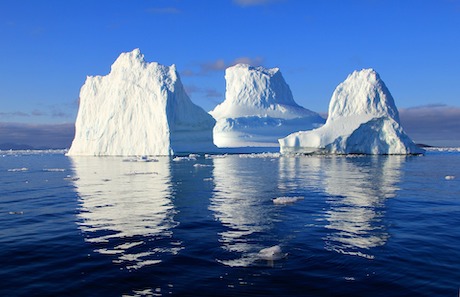
Shipping line Hurtigruten is bringing a new vessel named Roald Amundsen into service this year for cruises including exploration of the Antarctic. A 20-day holiday will set you back at least £8,000 per person, but that's without flights to the tip of South America and any shore excursions or other extras. As you would expect at that price, the ship looks amazingly luxurious.
It has two restaurants as well as a shop, photo centre, library, internet facility, science centre, lecture halls, pharmacy, hospital, compass service centre, and outdoor walking and explorer decks. No foodbanks as far as I can see. How can all this possibly be environmentally responsible? Well, according to the website,
“The MS Roald Amundsen explorer cruise ship will be powered by an innovative hybrid solution including four Rolls Royce Bergen B33:45 engines and batteries. The engines will be equipped with a selective catalytic reduction (SCR) system to meet the IMO Tier III nitrogen-oxide (NOx) emission limits.
“The fully electric propulsion will integrate two Azipull azimuth thrusters driven by permanent magnet (PM) motor and two tunnel thrusters. The PM motor will deliver high efficiency across different speeds and will minimise the space needed in the thruster room.”
The bottom line is that the ship will use 20% less fuel, create fewer emissions and passengers will be able to experience silent progress as they cruise among the icebergs under electric power alone.
I can’t help thinking that it would be even more environmentally friendly if they didn’t go at all.
Not the Greenest?
MV Roald Amundsen may in any case not be the greenest ship in the world for much longer.
The design of the Ecoship, a cruise vessel that will carry out humanitarian and environmental missions for Japan-based NGO Peace Boat from 2020, has been finalised. The ship, which will incorporate ten solar-powered sails, retractable wind generators and hybrid engines, has been touted as the greenest cruise vessel in the world.
Peace Boat itself is an interesting organisation. It was established 35 years ago and takes passengers to visit ports and countries around the world. The majority of people on board are Japanese, but English and Spanish-speakers also join them. The cruise is designed to be a cultural learning experience, with expert presenters, performers and the opportunity to learn Japanese. On the website they say:
“Our voyages feature hands-on experiences both onboard the ship and ashore at our ports of call. Each activity is designed to enrich passengers’ lives, promote sustainability, and build long-lasting friendships across borders. Each cruise brings together more than 1,000 adventurers of diverse ages and nationalities, who become a tight-knit community as they travel the world together.”
“Peace Boat is a committed campaigner for the United Nations’ Sustainable Development Goals, or SDGs. Also known as the “Global Calls”, the SDGs are a call to action to protect the planet and end poverty. We sail with the SDG logo on our ship, and our programs onboard and in port engage people to take action for the goals.”
I must find out more.
Turning to a different mode of transport…
Learning to live with an electric car
We've now had our electric car for more than three weeks and we're beginning to expand our knowledge. The main issue is about charging it, particularly when away from home. So far we’ve been charging it at home, plugging it into an ordinary domestic 13 amp socket. This is a very slow method of charging, but perfectly adequate for restoring the battery overnight. Our car came with two cables; one for connecting to chargers and one with a special interface built into it which allows us to plug it into the domestic socket. Buyer beware message here for anyone thinking of buying an electric car. I have heard of that if you buy an electric Renault you don't get the cable for the domestic point as standard. New owners have found that they have to buy it as an extra at around £500. Something to check before you sign the order for your new car.
The dealer who sold us our car gave us very little information about charging. The attitude was that the way we chose to fuel the vehicle was really nothing to do with them.
Finding the networks
Our car comes with an app which allows us to programme the charging time so that we can take advantage of off-peak electricity. It also shows local public charging points. However I’ve have discovered that there are several different networks and the one that's related to our car - plugsurfing.com - has only one charging point in the local area. Fortunately the other networks are better represented, and in principle we can use them. I say in principle, because the networks all have their own access protocols. Some, although I have yet to find them, apparently let you charge on demand using a credit card. Most networks require you to set up an account and you activate the charging point either by using an app on your phone or with an RFID smart card. This sets the unit charging and deducts the cost by direct debit from your bank account. Some charging units are free to use. Hotels sometimes have them for their guests.
How fast?
Apart from the range of different networks, there are different types of charger, differing in two main ways. First of all there are rapid, fast and slow chargers, although Ecotricity, who have a near monopoly on chargers on English motorways, - they call rapid “fast” and they call fast “medium” and they don’t mention slow.
At present in the UK a rapid charger delivers up to 50 kW. A fast charger delivers between 7kw and 22 kW while a slow charger is basically equivalent to a domestic socket and runs at about 2kW.
Plugging in
Secondly, there are at least three different types of plug: Chademo, CCS and Type 2. Tesla appears to have its own as well. These plugs are associated with different rates and different methods of charging, and your car will determine which one you can use and how fast it will charge. Every electric car has an on-board charger, although it would be more accurate to call it a charging interface. The electric smart model which preceded ours had a 7kW interface. You could plug it in to any charger with a Type 2 plug, but regardless of the power of the charger, the car would only take 7kW. Our car has a 22kW interface, so with the right charger it will charge up three times as quickly.
The Hyundai Experience
On the blog I’ve put a link to a video which recounts one motorist’s experience with the Hyundai Ionic Electric on long journeys. This car has a CCS rapid charger socket but he finds that the number of CCS-equipped charging stations on motorways is small. There seemed to be far more Chademo units. He's also quite critical of the Ecotricity app which sometimes shows chargers as available when they are actually in use or out of order. He clearly likes his car, but has found the charging process to be quite frustrating. Take note that this video dates from February 2018, so things may have changed by now.
Buy Secondhand?
The prices of secondhand electric cars are currently low and late model low mileage vehicles can be had at substantial discounts to the new price. The technology is advancing rapidly, so if you are tempted to buy one check how it differs from the current model. What is its range? Expect to get no more than 70% of the quoted figure - more than that in summer but significantly less in a cold winter. Is the battery as big as the one on the current model? What charging rate will it support and does it have rapid-charge capability? If you are going to charge at home, does it come with the correct cable?
If you are going to charge at home it is better to have a socket on a dedicated spur because you will be using a high current for an extended period. Better still to install a domestic charger. There are government grants to cover part of the cost of these and if you switch your electricity and gas to Ecotricity they will give you a special deal on a charger.
Superfast Future
What of the future? A consortium of major European motor manufacturers is developing IONITY, a network of 350kW chargers which are really fast. Already they have units in operation across Europe and Scandinavia, although probably less than 100 locations in total. Many more are under construction, including two in the UK and one in Ireland. They are standardising on the CCS plug.
Charging at this rate gets close to the time need for filling a conventional car with petrol. Maybe we will see charging stations combining with or taking over from filling stations. Of course you can only get the benefit if your car is designed to take charge at this rate.
Finding the Power
One question that is always raised is where will we get all the electricity from? It’s a key question, if we’re going to switch the nation’s transport fleet from oil to electricity. One thing to remember though, is that a petrol or diesel car is about 35% efficient. An electric car is about 80% efficient, so we’ll need less than half the energy to power the fleet. It’s been suggested that if we all drive electric cars and we all get home at the same time and put them on charge it will overload the electricity grid. However, as ranges increase and public chargers become faster it will no longer be necessary to charge every day . Also, if people charge at home most domestic chargers are very much smaller than the public rapid chargers - 7kW rather than 50kW. And if people charge at home they will often charge overnight when it’s cheaper.
I’m still driving my 13-year-old hybrid. Lovely car, but after 147,000 miles repairs are starting to get expensive. I think my next car will be electric.
Factfulness
I told you that I had been reading books and the one I want to talk to you about today is Factfulness by Hans Rosling. It was actually published a year ago so you may already have seen it, but if not I recommend you track it down.
It starts with a quiz, a multiple-choice questionnaire on the state of the world. Here is a spoiler alert. Before I examine it in detail you can try it out for yourself by going to http://factfulnessquiz.com . See if you are one of the 13% who get it right.
What do you know?
Okay, I'm going to go on now and tell you all about it. As I said, it's a multiple-choice questionnaire, and asks things like:
- In all low income countries across the world today, how many girls finish primary school? 20%, 40% or 60%.?
- Where does the majority of the world’s population live? In low income countries, in middle income countries or in high income countries?
- There are 2 billion children in the world today, aged 0 to 15 years old. How many children will there be in the year 2100 according to the UN? 4 billion, 3 billion, or 2 billion?
- How many people in the world have some access to electricity? 20%, 50% or 80%?
Only 13% of the people that Rosling surveyed got the answers right. He questioned people in all walks of life including business leaders at the world economic forum and politicians and government ministers, as well as students and people from all types of education, occupation and background. They all thought that things were far worse than they really are. This is particularly worrying if politicians and people who are governing the countries of the world are basing their actions on a worldview which is 30 years out of date.
The right answers to these questions are that 60% of girls finish primary school in low-income countries, the majority of the world’s population lives in middle income countries, the United Nations estimates that there will still be no more than 2 billion children in the year 2100 and 80% of people in the world today have some access to electricity. How did you do?
Population
One of the most interesting facts to me was the explanation of why population is likely to reach 11 billion by 2075, and then to peak at that point and stabilise at that level. The reasoning is based on the fact that the birth rate has collapsed over the last 50 years to just about replacement level. In 1965 the global average number of births per woman was five. By 2017 it was 2.5. The current population contains a large proportion of young people who will reach childbearing age and replace themselves. This will increase the population but as those generations get older each following generation will be of the same size and will only replace itself. Some population increase will occur because people are living longer, but that cannot increase indefinitely, so that, combined with a fixed number of women giving birth at replacement level each year, means that population will stabilise. See Chapter 3 of the book for more detail, charts and graphs.
Factfulness analyses each of its questions in detail and explains how misunderstandings arise and how misinformation may be promoted. It is a useful review of the issues which affect sustainability and a valuable guide to avoid taking headlines and statistics at face value, but rather to analyse, question and understand.
I recommend you get hold of it and dip into it to enjoy insights like “The negativity instinct”, “The straight line instinct”, “the blame instinct”, “the size instinct” and “let’s beat up grandma.”
Factfulness by Hans Rosling is available from all good bookshops and no doubt from disreputable ones as well.
News this week that UK carbon emissions are down.
Carbon Brief reports that UK carbon emissions have fallen by 38% since 1990. This, they say, is faster than any other major developed country. According to their analysis, the most significant factors include a cleaner electricity mix based on gas and renewables instead of coal, as well as falling demand for energy across homes, businesses and industry.
A cleaner electricity generation mix accounts for more than one third of the improvement, as gas and renewables displace coal.
The report says:
“UK and international emissions accounting practice counts bioenergy as zero-carbon at the point of use, a convention followed in this article. Upstream emissions due to harvesting, drying, storing and transporting imported bioenergy, as well as from associated changes in land use and forest carbon stocks are, in theory, accounted for in the country of origin.
"These emissions can be large and in some scenarios could offset or even outweigh the climate benefit of replacing coal with biomass-fired power. Note, however, that only around a quarter of the bioenergy used in the UK is imported.”
Drax
Bioenergy is a significant proportion of the new generation mix and a significant proportion of bioenergy use is accounted for by Drax power station, the UK’s largest. It has now converted four of its six boilers to burn wood pellets instead of coal. The theory is that the CO2 produced by burning this wood is offset by the growth of new trees. In the case of Drax, the pellets are mainly imported from forests in the United States. Note the phrase in the report, “…accounting practice counts bioenergy as zero-carbon at the point of use…” That’s the accounting practice, but the reality is that Drax releases tonnes of CO2 into the atmosphere every day, probably as much as if it were burning coal, and will continue to do so indefinitely or at least until someone makes Carbon Capture and Storage work.
News from the Arctic
The Climate Action website informs us that research, published in the journal Nature Communications, reveals that the Arctic is experiencing its warmest century for 115,000 years.
Simon Pendleton, lead author and a doctoral researcher in CU Boulder’s Institute of Arctic and Alpine Research (INSTAAR), said: “The Arctic is currently warming two to three times faster than the rest of the globe, so naturally, glaciers and ice caps are going to react faster.”
He added: “You’d normally expect to see different plant ages in different topographical conditions. A high elevation location might hold onto its ice longer, for example. But the magnitude of warming is so high that everything is melting everywhere now. We haven’t seen anything as pronounced as this before.”
Time to urgently reduce emissions of climate-changing greenhouse gases, I think.
Drax again
I have great admiration for Drax. It’s the UK’s biggest power station, it’s based on 1960’s technology and nearly 60 years on has developed to be one of the most efficient in the country. It aims to be clean by converting to biomass, but arguably that’s not really the case. If the wood that it burns were left to rot it would in time release CO2, but that could be over a very long period. Wood built into houses or made into furniture may not release its carbon for centuries. Drax burns wood in a flash and there’s CO2 emissions from the supply chain as well - the forestry equipment, the pelleting plants, the docks, the ships and the purpose-built freight trains.
It’s glib to say it’s time to shut it all down. Drax supplies around 5% of the UK’s electricity and that cannot replaced at short notice. It must be replaced though, and if we cannot develop alternative clean generation in time then we must accelerate the efficiency of energy use and the reduction of electricity demand. Of course that would be politically impossible in many countries. Sadly, although the canary collapsed in the coal mine long ago, the majority of our politicians fail to understand the seriousness of our position; still less are prepared to do anything about it.
We need a leader to get things done. Anybody seen one?
Green Investors
Global investors have called on six fast food giants to act urgently on the climate and water risks in their supply chain. They have sent letters to companies such as Dominoes, KFC and McDonalds.
A new investor briefing from FAIRR (Farm Animal Investment Risk and Return) highlighted the environmental impact of the meat and dairy producers that supply the fast food chains. Agricultural emissions, including those from meat and dairy, are on track to contribute to more than 70% of greenhouse gas emissions by 2050.
A Green Lent?
This comes in a week when the Pope has been challenged to go vegan for Lent. Campaigners have promised to donate $1 million to a charity of his choice if he does so.
Green Clothing
The rag trade is also in the firing line. The Environmental Audit Committee has found that six UK fashion retailers are significantly failing to reduce their environmental impact. While some retailers are fully engaged, others have failed to sign up to the SCAP targets to reduce their carbon, waste and water footprint. SCAP, the Sustainable Clothing Action Plan, sets targets for 2020 by which time signatories pledge to have achieved
- 15% reduction in carbon footprint;
- 15% reduction in water footprint;
- 15% reduction in waste to landfill; and
- 3.5% reduction in waste arising over the whole product life-cycle,
by comparison with 2012 levels.
This week the launch was announced of My Wardrobe HQ, an on-line clothing supplier which will rent rather than sell its products. To rent items, shoppers and brands will agree a set price to be paid alongside a deposit. The deposit will be released to the renter once the goods have been safely returned.
Green Furniture
At the same time furniture store IKEA announced plans to lease rather than sell its furniture. There will be a pilot study in Switzerland, initially for the office furniture market. If all goes well this service could be extended to the retail consumer.
Both these initiatives are in line with the spirit of the circular economy. It goes way beyond reduce, reuse and recycle. It will incorporate refurbish, repair and remanufacture, to maximise the value gained not only from the materials, but from the energy and labour which were used in the original manufacture.
More pressure from investors.
Oil and gas giant BP has announced its pledge to disclose how its strategy will align with the Paris climate goals. This follows a move from investors proposing a resolution to be put to shareholders at the company’s annual general meeting in May 2019. The resolution will also require BP to set out how the company evaluates the consistency of each new material capital investment with the goals of the Paris Agreement
Stephanie Pfeifer, a member of the global Climate Action 100+ steering committee and CEO of the IIGCC (Institutional Investors Group on Climate Change), explains:
“Investors are helping ensure climate change is firmly on the boardroom agenda, which is especially important for the oil and gas sector. It’s encouraging to see major companies such as BP moving in the right direction. Global carbon emissions need to be reduced urgently and investors expect other companies in the sector to follow suit.”
Separately, BP also announced that greenhouse gas (GHG) emissions reductions have now been included as a factor in the reward of 36,000 employees across the Group and around the world, including executive directors.
It is interesting that BP now owns Chargemaster, a major charging network for electric vehicles. And Shell is partnering with IONITY, the group rolling out a network of 350kW chargers across Europe.
And finally…
CHANGING THE WORLD ONE GRUB AT A TIME
Do you have a dog? Is your dog one of the millions in the UK that chomp through a meaty diet? Eating meat causes climate change, some would claim, and there’s more than a grain of truth in that. So, if you’re going vegan, now your pet can too. Yora Pet Foods announce their dog food based on insects. Oh, OK, it’s probably not vegan but at least it doesn’t require the slaughter of large animals.
https://www.metro.news/insect-protein-dish-of-the-day-for-your-environmentally-friendly-pet/1421283/
And finally, finally…
I just had to slip this news item in. You’ll remember the Juliana case, which involves a number of young people in the US suing the government for damaging their life chances by allowing the oil and gas industries to operate in a way which can damage the planet. The administration has spent years trying to get the case struck out before it goes to trial. Here’s a quote from a report on the latest hearing:
“The Trump administration attorneys also argue …that United States citizens have no constitutional right to a “liveable climate.””
Well that’s good to know.
And finally, that really is it for this week. Apologies to Patrons who are getting this only half a day earlier than the rest of the world. Sorry, but life seems to get in the way of these weekly words.
Warm thanks to my Patrons who support my efforts with a monthly contribution to cover the costs of hosting. It’s much appreciated. Your ideas are valuable too.
Patron or not, do let me have your ideas and feedback at mail@anthony-day.com. And if you too would like to be a patron you can find all the details at patreon.com/sfr.
I’m Anthony Day.
That was the Sustainable Futures Report.
And I’m off to think about next week’s episode.


