What Next?
Hello and welcome…

…to the Sustainable Futures Report for Friday, the 1st of November. Despite protests and promises the United Kingdom is still part of the EU, and that is the last that you will hear of Brexit or of the election in this episode.
I’m Anthony Day and let me start by thanking you for listening and for thanking my patrons for their continued support. Dan Stanley is a UN Accredited Climate Change teacher working in the North of England. Thanks for your feedback, Dan. Good to hear from you!
This Time
This time I’ll be talking about the growth in renewable power including signs that France may prioritise renewables over nuclear, climate rules for corporations, forces behind climate denial, plumbing the depths of abandoned coal mines and some news and comment on climate science.
Wild Weather
California Ablaze
But first, news from California. “This is a worst-possible wildfire scenario for Southern California,” according to vox.com “Every year, climate change makes a “catastrophic” fire like this one more and more likely.” The article continues, “The wildfire that smashes all of California’s previous notions of “the worst that could happen” begins with an illegal firecracker set off by campers in the San Bernardino National Forest. Patches of this forest, near the spa city of Palm Springs, have burned many times before. But this fire becomes monstrously big in a matter of hours because a severe, multi-year drought and an extra-long hot summer have left an unprecedented number of trees and shrubs bone dry, defenceless to flame.”
CBS reported that in Northern California, the massive Kincade Fire had grown to more than 76,000 acres, although by Wednesday evening, it was 45% contained. It had damaged or destroyed about 200 homes and other buildings.
According to USA Today some 200,000 people have been forced to leave their homes. Many others were without power after Pacific Gas & Electric shut off electricity to millions of people in an effort to prevent new blazes. Fallen power lines or faulty equipment have been the cause of fires in the past. The utility company has shut off the electricity from some areas, explaining that it cannot risk being held liable for the damage caused by fires started by its equipment. It’s not clear how long these cuts will continue.
Meanwhile 70mph winds across the state have driven the flames across widening areas.
CBS Los Angeles cites a report from the NOAA, the National Oceanic and Atmospheric Administration, which predicts that winter will be warmer and drier than usual in California. Presumably a fire risk will remain.
One piece of good news is that a flock of goats chewed away enough undergrowth to create a fire break which protected the Ronald Reagan Library from going up in flames.
Australia Too
Not so lucky were koala bears, many of whom are believed to have been wiped out by fires on Australia’s east coast this week. Of course the koalas made the headlines, but other wildlife and their habitats will also have been destroyed. xinhuanet.com reports that smoke from the fires has reached Sydney, and New South Wales (NSW) State Department of Environment has triggered a health alert.
"If it's smokey and you have a chronic respiratory or heart condition, it's important to avoid all outdoor physical activities as much as you can," the Deputy Director of NSW Environmental Health Watch Dr Richard Broome warned on social media.
It’s early spring in Australia, but temperature records are already being broken.
And in Japan…
No wildfires, but Typhoon Hagibis triggered floods and landslides as it battered the country with wind speeds of 225km/h (140mph) earlier this month. You may remember that it disrupted the Rugby World Cup, but at least nine people were reported dead as the country recovered from its biggest storm in decades. In the town of Hakone near Mount Fuji more than 1m (3ft) of rain fell over two days, the highest total ever recorded in Japan over 48 hours.
Japan suffers about 20 typhoons a year, but Tokyo is rarely hit on this scale.
So, more extreme weather. Can anyone seriously deny that the climate is changing? Well, yes, actually.
Denial
Politicians
For example, The Guardian Newspaper reveals that Conservative MPs in the UK are almost five times as likely to vote against climate action as legislators from other parties. They based this on an analysis of 16 indicative parliamentary divisions over the past decade. They found that the Tories also registered many more donations, shares, salaries, gifts and tickets to sporting events from fossil fuel companies, petro-states, aviation companies and climate sceptics.
Oil Companies
A joint analysis by the Guardian and InfluenceMap, a non-profit lobbying watchdog, reveals that Oil and gas companies are spending millions of dollars on campaigns to fight climate regulations at the same time as touting their dedication to a low-carbon future.
Their global PR campaigns on social media promote a commitment to a green, low-carbon future, but across the US in particular, specific local campaigns are obstructing tighter regulations on fossil fuel extraction.
In many cases, oil and gas companies are using direct advertising but some targeted lobbying appears to be more opaque. It is channelled through so called “community” groups – which are being funded by fossil fuel companies.
Columnist George Monbiot reports that some oil companies argue that they are not responsible for our decisions to use their products. Climate damage is therefore our own fault. I can understand, though not accept this position. Climate activists are frequently criticised for not living a carbon free life. The problem is that the society and infrastructure we live in makes that next to impossible. We can change, but we can only achieve real change if governments and the fossil fuel companies work with us to achieve change. There’s little sign of that from the oil industry, an industry with immense resources and some of the brightest minds which could surely lead the world in imagining and implementing change. This would be good for the continued existence of the human race and of the oil companies - though not as oil companies - as well.
Carmakers
More research from The Guardian reveals that global carmakers are among the leading opponents of action on the climate crisis, according to exclusive analysis of the way major corporations frustrate or undermine initiatives to cut greenhouse gases. The research shows that since 2015, Fiat Chrysler, Ford, Daimler, BMW, Toyota and General Motors have been among the strongest opponents of regulations to help countries meet the 1.5C warming limit in the Paris agreement.
SUV drivers
This comes amid reports that while transport is a major emitter of CO2, the move towards SUVs, sports utility vehicles, has made the situation worse. These vehicles are much larger than many cars, far less fuel efficient and have high emissions levels. In the UK, the government’s revision of the road tax bands in 2017 has more or less removed any disincentive to owning a large, polluting car. If global SUV drivers were a nation they would rank as the 7th largest CO2 emitter.
Well done the lobbyists!
Corporate Climate Rules
The governor of the Bank of England has warned major corporations that they have two years to agree rules for reporting climate risks before global regulators devise their own and make them compulsory.
Mark Carney said progress had been made by many of the largest banks and energy companies to harmonise how they report their risks, but added: “Progress in both quantity and quality is uneven across sectors.”
Maybe this will rein in some of the exaggerated claims from so-called “green” organisations and make shareholders more aware of the risks their investments could be subject to.
Fake Science
There are powerful voices ready to deny climate science, not least in the White House, as detailed in a report by the National Task Force on Rule of Law and Democracy.
“There are now “almost weekly violations” of previously cherished norms, the report states, with the current administration attempting “not only to politicise scientific and technical research on a range of topics, but also, at times, to undermine the value of objective facts themselves”.
The report echoes complaints by a number of former federal government officials who claim their work on areas such as the climate crisis and pollution standards was either sidelined or subverted by the Trump administration as part of its zeal for environmental deregulation.
In the UK, of course, climate activists have been called “uncooperative crusties” by the Prime Minister, and his latest withdrawal bill permits environmental legislation to diverge from European norms. The indications are that the fight to persuade legislators to take sensible action will be long and hard. Interestingly, many of those denying the climate crisis are the same people who are urging the UK to leave the EU. Do they deal in facts?
Let’s look at Energy
It’s never far from the Sustainable Futures Report.
Renewables
According to Climate Action, a new report has found that renewable energy has the potential to increase by up to 50 per cent over the next five years. The International Energy Agency (IEA) has found that global renewable power capacity is set to expand with the installation of solar PV systems on homes, commercial buildings and industrial facilities transforming the way electricity is generated and consumed.
“Renewables are already the world's second largest source of electricity, but their deployment still needs to accelerate if we are to achieve long-term climate, air quality and energy access goals,” said Dr Fatih Birol, the IEA’s Executive Director.
I reported a while ago that while the total amount of electricity produced by renewables was constantly growing, it remained at much the same proportion of total energy because energy demand was growing. Renewables were simply making up what nuclear and fossil fuels were unable to supply. This constant emphasis on managing supply is now having major implications for the power infrastructure, which risks overloading. A solution is Demand Side Management. I intend to bring you more on that shortly.
And in France…
France is know as a nuclear state, producing some 75% of its electricity from nuclear reactors - more than any other country in Europe and probably the world. Will it build a new generation as these stations reach the end of their lives? The decision has not yet been made, but euronews reports that France could yet pursue a long-term strategy of 100% renewable energy, following remarks made by Environment Minister Elisabeth Borne on Europe 1 radio. The CEO of EDF, which runs all the reactors in France and is building the new UK reactor at Hinkley C, had said that it was clear France was preparing to build new reactors.
“EDF does not determine French energy policy,” the minister said, pointing to France’s previously announced policy on reducing nuclear power to 50% of the electricity mix by 2035 while increasing the contribution of renewables.
It may be that the new citizens’ assembly established in France will have a view on energy policy. A sample group of 150 French citizens — from unemployed people to pensioners and factory workers — will this week begin advising the French president Emmanuel Macron on how France can cut carbon emissions to tackle the climate emergency.
The panel was chosen by selecting people, aged from 16 to over 65, from towns and villages across France. More than 25,000 automatically generated calls were made to mobile numbers and landlines to find a representative “sample of national life”.
Coming from various backgrounds and professions, the citizens are not experts on environmental issues but are expected to have views on the difficulties of combating the climate change and to offer ideas. They will be asked to consider the role of individuals, and society as a whole – covering housing, work, transport, food, shopping and methods of production — and suggest solutions for cutting emissions, which will be put before parliament.
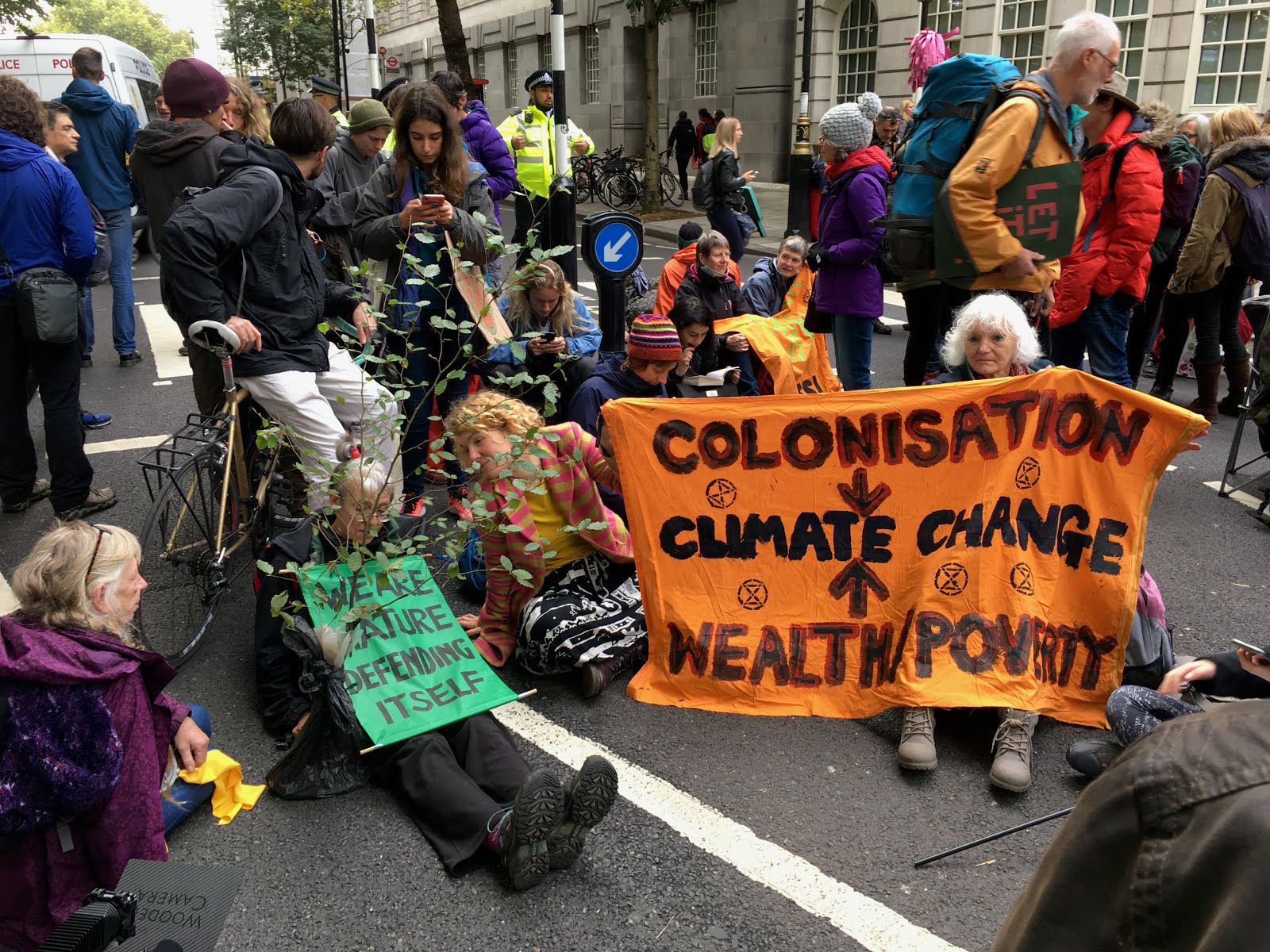
One of Extinction Rebellion’s demands is the establishment of a citizens’ assembly in the UK. One was promised by the Theresa May government, but nothing has been heard of it recently.
Underground Power
The perpetual problem with renewables is intermittence. Solar panels produce nothing at night or when the sun goes in: wind turbines fall silent when the wind drops. At other times there can be far more energy produced than can be used. The solution is storage, but lithium batteries are expensive and so are pumped storage schemes. Now an Edinburgh start-up presents Gravitricity. The idea is to use surplus energy to winch weights up to the top of disused mine shafts and drop them down again at times of demand. As they fall, the weights will turn pulleys which will drive generators. The number of weights and the speed at which they fall will be varied to match output with demand. Imperial College London estimates that the system will have half the cost of lithium batteries of the same capacity.
Also looking down a hole for energy are the people at the Eden Project in Cornwall, southwest England. Cornwall is notorious for high levels of background radiation from the granite rocks which underly much of the county, but this initiative is focussed on geothermals. The Eden Project consists of a number of giant biomes containing specimen plants from different climates around the world. The plan is to drill some three miles into the earth’s crust and extract heat. This first well will initially supply a heating system for Eden’s biomes, offices and greenhouses. It is intended to pave the way for the second phase – another well almost three miles deep and an electricity plant.
Completing the second phase will mean Eden will be generating sufficient renewable energy to become carbon positive by 2023, and it aims to be able to provide heat and power for the local area.
Drilling will start in 2020. A major part of the investment is provided by the EU. At the moment.
Scientific Stories
Pacific Heatwave
From NBC News comes the message that a vast heat wave is endangering sea life in the Pacific Ocean.
A vast region of unusually warm water has formed in the northeastern Pacific Ocean, and scientists are worried that it could devastate sea life in the area and fuel the formation of harmful algal blooms.
The broad swath of warm water, now known as the Northeast Pacific Marine Heat Wave of 2019, was first detected in early June. Data from weather satellites and buoys show that it measures six to seven times the size of Alaska, which spans more than 600,000 square miles.
Given its size and location, the marine heat wave rivals a similar one that arose in 2014 and persisted for two years. That heat wave, known simply as “the blob,” occupied roughly the same region of the Pacific and became known for triggering widespread die-offs of marine animals including sea birds and California sea lions.
It's likely that global warming will exacerbate heat waves in the future, given the excessive amounts of heat that oceans have absorbed in recent years.
“With this trend of overall warming, climate change will likely make marine heat waves more intense and more frequent,” said Nick Bond, a professor of atmospheric sciences at the University of Washington in Seattle.
Picturing the Future
Jonathan Foley, writing for Medium, describes his three most important graphs in climate change. The first shows greenhouse gases and makes the point that while CO2 is by far the most important it is by no means the only greenhouse gas released by human activity. He also reminds us that we’ve known about the greenhouse effect since 1830.
The second chart breaks down greenhouse gas emissions by source. You might be surprised that transportation yields only 14%. The biggest emitter is electricity generation at 25%, closely followed by food and land use at 24%.
The third graph looks at where human-produced CO2 emissions end up. About 45% of the emissions stay in the atmosphere, contributing to climate change. But the remaining 55% are absorbed by the oceans and by land-based ecosystems. These natural carbon sinks have greatly reduced climate change from what it would have otherwise been, absent these carbon absorbing processes. The question is: Can we somehow enhance these natural sinks, or add to them with engineered devices?
This perspective emphasises that it’s not just energy that we need to concentrate on if we want to green our planet and seek net carbon neutrality - food and land use are equally important.
We’ll need to change
When has change not been on the agenda?
A report from Imperial College London says that the UK government must tell the public that small, easy changes will not be enough to tackle climate change. In a submission to the Committee on Climate Change it says an upheaval in our lifestyles is the only way to meet targets. We must eat less meat and dairy, swap cars for bikes, take fewer flights, and ditch gas boilers at home.
I wonder what Julia Hartley - Brewer would say about that. Oh, I know what she’d say.
And Finally
All right, I admit it, I read The Guardian. But I read other newspapers as well and I pick up my leads from the press and news websites, and by setting up Google alerts on particular topics. I get leads from listeners, too. Whenever possible I try and go behind the newspaper story to find the original report or source. It doesn't always say what the journalists report! The Guardian is quite accurate however, and committed to giving the climate story wide coverage.
In Hot Water
Before I go, let me go back to a story from a few weeks ago about the Mixergy system, which is a smart hot water tank that's networked as part of the internet of things. It is smart because it is designed to heat only the water you need and can be programmed to have that water available at the time you need it. I was a bit sceptical about it.
Patron Tom de Simone writes
“You mentioned the Mixergy hot water tank and whether we should be looking at boiling water on demand near the taps rather than have a central tank and allow heat to be lost through the pipes.
There are existing point-of-use solutions like Zip taps, but they are best suited to kitchen and bathroom sinks. Obviously one issue is that they're quite expensive, and you would need a unit in each place where hot water is needed. Plus, I don't think they would be powerful enough to fill a bath in a reasonable amount of time, so would still need to look for another solution there!
“I think the Mixergy tank is a particularly attractive option if paired with rooftop solar (PV or thermal). Then you can use excess solar energy to heat your water and keep your bills down. In addition to that, if you have an economy7 electricity tariff or similar, you can get extra heat for cheap overnight, ready to use the next day! One of the great things about the Mixergy tank is that it learns your usage patterns and tries to top up overnight with just the right amount. I would feel less bad about energy wasted in pipes if it was being generated renewably to start with :)”
Good points - thanks Tom. What do we do about the wasted water, though? I’ll leave you to think about that until next week.
Yes, that was the Sustainable Futures Report and I'm Anthony Day. Thanks again for listening, thanks again for being a patron, and if you’re not and you'd like to be a patron have a look at patreon.com/SFR. Your support is invaluable.
Remember, the full text of this episode with extensive links to sources is on the blog at www.sustainablefutures.report .
Next week we’ll hear climate researcher Dr Matt Winning explaining how he presents the climate crisis through stand-up comedy.
That's all for this week and there will be another episode next week.

Sources
California and extreme weather
Goats make firebreak
Power cut
Australia fires
Japan
.
Growth in Renewables
French citizens' panel to advise on climate crisis strategies
How UK's disused mine shafts plan to store renewable energy
Eden Project to begin drilling for clean geothermal energy
Climate Rules
Corporations told to draw up climate rules or have them imposed
Denial
Today we pledge to give the climate crisis the attention it demands
Tory MPs five times as likely to vote against climate action
Fossil fuel firms' social media fightback against climate action
Exclusive: carmakers among key opponents of climate action
The big polluters’ masterstroke was to blame the climate crisis on you and me
Trump administration's war on science has hit 'crisis point', experts warn
Revealed: the 20 firms behind a third of all carbon emissions
Scientists’ view
Big lifestyle changes