Thursday, January 23, 2020

I Don't Deny It


I don’t deny it.
OK, OK, I don’t deny it. I said there wouldn’t be another Sustainable Futures Report until Friday 14th February. That’s still true, although you’ve got this extra one for Friday 24th January. There’s just so much piling into my inbox that I  have to do something  about it.

I’m Anthony Day and this is the Sustainable Futures Report.
New Patron
First of all, let me welcome the newest Gold Patron of the Sustainable Futures Report, Victoria Covington. Victoria’s aim is to cut her carbon footprint by 45% this year and I hope she’ll keep us in touch with her progress.
This episode is about denial.
You’re fully aware that I don’t deny that climate change is an emergency, because I produce this podcast to make you aware of the problems as well as of the efforts being made to challenge them. I monitor newspapers and broadcast media to bring you reports, but could I be a victim of confirmation bias? Do I look only at the media that confirm my view that climate change is an emergency? Perhaps I should seek a balance and present an opposing view from time to time. The danger is that balance should not be confused with spurious balance, a trap that the BBC has fallen into in the past. If the science is settled, producing an opposing view is spurious balance. 
Balance
No serious media outlet will today present a counter-argument to the scientific opinion that smoking causes serious diseases, nor will they attempt to deny that the UK has reached a dangerously high incidence of measles cases because some people choose to reject the evidence that vaccinations save lives. The BBC was forced to review its notion of balance after it was heavily criticised for presenting Lord Lawson as a climate expert when he misrepresented climate statistics and the position of UN scientists on climate change. He has no qualifications in the field.
There is no doubt that the challenges of climate change are serious and can be quite frightening for many people. There is every incentive for them to believe that the science is wrong and there is nothing they need to do about it. For this reason we see more and more denial on social media and mainstream media as well.  A YouTube video popped up in my inbox recently, presumably because some search engine somewhere decided I would find it interesting. I did. I thought it was worth looking at in detail. It’s called 
“What I wasn’t told about climate change with Luca Rossi.” 
Here’s how it starts:
[]
OK, you get the idea. Let’s look at the claims he makes.
Polar bear numbers up by 400% since 1950s
This may be true. Counting polar bears is incredibly difficult. According to the Royal Canadian Geographical Society there are 19 populations of polar bears spread across Russia, the US and mainly Canada. They migrate, which can make it difficult to avoid double counting. They are easier to spot on land than on the ice, so if melting ice is driving them ashore it may give the impression that numbers are increasing. Respected experts violently disagree: some believe that the polar bear is endangered and needs protection while others believe that rising population justifies increased hunting quotas. Some observers state that many bears look unhealthy and that there are fewer cubs than would normally be expected, leading to fears for the long-term survival of polar bears.
If polar bear numbers are increasing that must be good news, but it tells us very little about the effect of climate change across the world.

Water vapour is the most abundant greenhouse gas
Yes, we know that, we covered it in the Sustainable Futures Report a few episodes ago. It’s probably been the most abundant GHG through human history. And?
CO2 is only 0.04% of the earth’s atmosphere and only a fraction of that is caused by humans
Yes, we know that too. It reached about 415 ppm in 2019. That’s a very small concentration, but still enough to have a significant effect. Small things can have a significant effect. An aspirin tablet is probably a lot less than 0.04% of your body weight, but it can still affect your whole body.
Up until the Industrial Revolution some 250 years ago the concentration of CO2 remained around 280 ppm. It fluctuates with the seasons because when plants grow in the Spring they absorb CO2 and when they die off in the Autumn CO2 is released, but generally atmospheric CO2 was in equilibrium. Although man-made CO2 is a small proportion of the total, it is enough to upset that equilibrium. Nature is unable to absorb all of the extra CO2, even though much has been absorbed by the oceans. This in turn has caused acidification with consequences for all marine organisms, while the total concentration and the warming effect is increasing.
There have been multiple times in the earth’s history when CO2 levels were higher than now but temperatures were lower.
That may be so, but I haven’t been able to verify it. What is certainly true is that with one exception every year since 2000 has been hotter than the one before and CO2 in the atmosphere continues to increase. We surely should concentrate on the here and now rather than on what might have happened in the distant past.
It is said that 97% of scientists agree on climate change and the science is settled, says Rossi, but in fact there is no consensus and science is never settled
It’s an absolute truth that science is never settled, but there comes a point where the balance of probabilities is that a given hypothesis is true and it makes sense to rely on it. Rossi goes on to support his point: “Why wasn’t I told that….
In September 2019 500 scientists wrote to the UN declaring that there was no climate emergency
In September 2019 500 academics wrote to the UN declaring that there was no climate emergency. Many of them were not scientists and few were climate experts. The paper was strongly supported by Mark J Perry, described as a scholar at the American Enterprise Institute. “How can there be a consensus,” he asks, “when there’s a global network of more than 500 knowledgeable and experienced scientists and professionals in climate and related fields who challenge the “settled science”?”
On the other hand there were many in the scientific community who completely rejected the conclusions of the 500. Writing on skepticalscience.com, John Cook says, “The latest attack on global warming consensus comes from Dennis Avery and Fred Singer who claim to have found 500 peer reviewed papers refuting that the last few decades of global warming are primarily anthropogenic. Previous attempts to find peer reviewed skeptic studies tend to miscategorise as skeptic despite the intent of the author or indeed the content of the paper. Avery and Singer appear to carry on this tradition.”
Fred Singer is a well-known contrarian who has previously worked for the tobacco industry to dispute the science around tobacco-related diseases.
RealClimate.org,  describing itself as a commentary site on climate science by working climate scientists, says, “Most of the academics who signed the petition have no or little experience within climate research (check Google Scholar). Some of the signatures also have connections with political think tanks.
“The message of the declaration is the same that the contrarians have repeated over and over again – but repeating it doesn’t make it more true.” There follows a detailed deconstruction of the arguments in the paper.
Climate Feedback describes itself as “a worldwide network of scientists sorting fact from fiction in climate change media coverage. Our goal is to help readers know which news to trust.” 
It reports that six scientists, including Professor Timothy Osborn, Director of Research, Climatic Research Unit at the University of East Anglia,  analyzed the letter and estimated its overall scientific credibility to be ‘very low’. A majority of reviewers tagged the article as: Biased, Cherry-picking, Inaccurate, Misleading.
Luca Rossi has more, and I find this next question disturbing.
Why wasn’t I told that Global warming has not increased natural disasters and [that] measures to combat global warming will deny the life-giving benefits of electricity to many people?
I cannot begin to understand what he means by “measures to combat global warming will deny the life-giving benefits of electricity to many people”, but let’s look at the other part of his statement. 
But first, 
who is Luca Rossi 
who’s asking all these questions? My first assumption was that he was American, but no, he represents Generation Liberty, an Australian organisation. More on that later. 
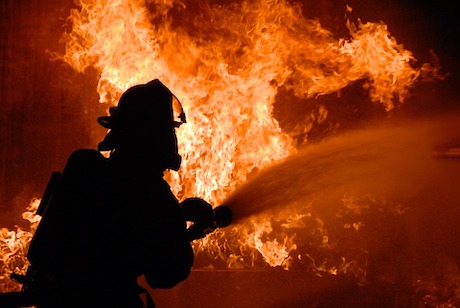
So here is an Australian commentator publishing on 23rd December 2019 when much of eastern Australia was in flames (it still is), and claiming that global warming has not increased natural disasters. Of course the Australian government line is that fires happen every year and these have been caused by arson and poor forest management - much the same as the arguments put forward by President Trump during last year’s wildfires in California. 
Climate Debate
Even before this the climate debate in Australia has been long and heated. Prime Minister Scott Morrison was forced to cut short a family holiday in Hawaii while the fires burned at home. Fires not caused by climate change, but arguably worsened by climate-induced drought lasting more than a year. Scott Morrison was forced to admit that he had mishandled the crisis and when he visited some of the disaster sites the locals refused to shake his hand and chased him away. He claimed that Australia was well on its way to exceed its climate targets, although the UN strongly denies this. 
Former PM writes
Writing in Time Magazine, former prime minister Malcolm Turnbull says, “Australia’s Bushfires Show the Wicked, Self-Destructive Idiocy of Climate Denialism Must Stop”. 
“As Prime Minister,” he says, “I tried to ensure that our climate and energy policies were governed by engineering and economics, not ideology and idiocy. Tragically, the climate-denying political right in Australia has turned what should be a practical question of how to respond to a real physical threat into a matter of values or belief.”
Murdoch Press responds
An article in Murdoch-owned The Australian responded vitriolically. I’ve put a link on the website but unfortunately that article is now behind a paywall.
What is Generation Liberty?
But what is Generation Liberty that Luca Rossi represents? According to its website “Generation Liberty, a project of the Institute of Public Affairs, is dedicated to advancing the ideas of liberty and freedom on Australian university campuses.” 
IPA
And the Institute of Public Affairs? It’s a pressure group based in Melbourne, Australia. Unlike many such organisations, it does reveal its source of funding. About half its income comes from Gina Rinehart, reputedly the wealthiest woman in Australia. Her money comes from Hancock Prospecting, a mineral exploration and extraction company. 
In 2013 the IPA celebrated its 70th anniversary. Guests included Gina Rinehart, Rupert Murdoch, former pm Tony Abbott and Cardinal George Pell (yes, that cardinal.)
Murdoch dissents
Rupert Murdoch is of course a well-known climate change denier, but this week son James Murdoch openly criticised his views. James is not part of the Murdoch Group management team at present, so don’t expect changes to editorial policy any time soon.
It’s about coal
Australia is the world’s biggest exporter of coal. It exports gas, too. What would restrictions on fossil fuels do to the country’s mining industry or to the economy at large? No wonder the IPA wants to change minds and PM Scott Morrison is keen to deny climate change, or at least to avoid doing anything effective about it.
Spreading Doubts
This “Why wasn’t I told?” campaign is just one tiny example of misinformation spread to raise doubts about climate science. In this case it’s aimed at university campuses, at future voters, and potential opinion-formers, business people and politicians. Let’s hope they teach critical thinking in Australian universities.
Meanwhile, at Home
Closer to home, denialism has taken a sinister turn. The police issued a guide to terrorist organisations as part of the national Prevent campaign, designed to prevent radicalisation. Among organisations listed was XR, alongside ultra-right white supremacy and extreme jihadist groups. Understandably there was outcry, as Extinction Rebellion is fundamentally committed to non-violence. To align such a group with organisations whose stated aims include violence is to suggest that the expression of free speech is terrorism. 
Initially the police responded by saying that they included the XR logo so that it could be distinguished from the other groups. I’ll believe that when they include the logos of the Conservative and Labour parties as well! I understand the guide has subsequently been with drawn for revision.
Not a Shock
Writing in The Guardian Mark O’Connell warns that pictures of the world on fire won’t shock us for much longer. It’s true that we get disaster fatigue, politics fatigue, news fatigue and so on until we just switch off. O’Connell goes further: “One thing that is often remarked about climate crisis,” he says, “is that the subject is characterised by a strange form of cognitive dissonance. You read about the melting ice caps, the rising temperatures, the mass extinctions, and you understand intellectually that something truly terrible is happening. It doesn’t feel like that on the nerve endings, though. On the nerve endings, it feels like an unseasonably warm day in January. But what is happening in Australia, and the images that are emerging from the fires, feels like a closing of the gap between the scientific evidence and the field of immediate perception.”
But will we do anything? He says, “…this would be a thing that would happen at the end of the world. People would point their phones at the fire in the sky, and they would send photos to their friends in other places. “This is what the apocalypse looks like here,” they would say. “How is it where you are?” There would be a great storm of content and engagement, and then there would be nothing at all.”
And my view?
The fires in Eastern Australia have turned the skies red, have loaded the air with pollution way in excess of safe levels, have killed dozens of people and destroyed thousands of properties. The firefighters have rescued people from all over the danger areas and the Federal Government has set up a fund to support people who have lost their homes, their possessions, their jobs and businesses and in some cases their families. 
Many other people who have lost their homes, their possessions, their jobs, businesses and their families in other countries have attempted to rebuild their lives in Australia. The Federal Government incarcerates those people indefinitely in concentration camps on remote islands like Nauru. We don’t like to talk about that sort of thing of course, either in Australia or elsewhere in developed nations. Maybe we too are in denial.
When much of Australia become uninhabitably hot, how many Australians fleeing the fires will we let into the UK?
And that’s it….
…for this unexpected edition of the Sustainable Futures Report. As planned. The next one will appear on Friday 14th February. Issues cramming the inbox include 

…and so it goes on. There will be a lot more stories by the time I get round to writing. Not least of course, about the World Economic Forum currently meeting in Davos. Will they be more decisive than the delegates to COP25 in Madrid last month?

I’d like to thank you for listening and particularly thank my patrons, including new gold patron Victoria Covington, for your support. Apart from you, I get no sponsorship, subsidy or advertising, which gives me the editorial freedom to say what I like. I hope you like it. If you don’t, please tell me. If you do, please tell your friends about the Sustainable Futures Report.
That was an unexpected edition of the Sustainable Futures Report.
I’m Anthony Day.
I’ll be back on 14th February.


Sources

Polar Bears

CO2


500 scientists


Australia fires

IPA

Attendees at IPA 70th celebration included:

James Murdoch's climate stance distances him from family empire


Pictures of the world on fire won’t shock us for much longer

Nobel Prizewinner
(Luca Rossi claims he dismisses climate science as pseudo science. He does)


Friday, January 03, 2020

100 Words


100 words

Hello and welcome to the first Sustainable Futures Report of the year published on Friday 3rd January 2020. I’m Anthony Day and I’d like to welcome first of all our newest patron, Manjunath Ramesh. He’s told me about the world’s most dangerous GHG. We’re looking into it. More in a future episode.
This episode is about ideas. I asked you suggest in 100 words your ideas of what we should do in 2020. But first, I’ve had some ideas from Ian Jarvis, following up on previous topics. He points me to a study from the University of California, Davis: 
“Grasslands More Reliable Carbon Sink Than Trees”. 
The report suggests that increased drought and wildfire risks are making grasslands better than trees at locking up carbon. Indeed, wildfires can turn trees from a carbon sink to a carbon source. 
Unlike forests, grasslands sequester most of their carbon underground, while forests store it mostly in woody biomass and leaves. When wildfires cause trees to go up in flames, the burned carbon they formerly stored is released back to the atmosphere. When fire burns grasslands, however, the carbon fixed underground tends to stay in the roots and soil, making them more adaptive to climate change.
The researchers accept that trees can store more carbon than grasslands, but the fire risk makes them less effective overall as a carbon sink. They urge an international re-assessment of carbon management policy. This is particularly compelling given the continuing and worsening bush fires in Australia. I don’t know whether the land where the trees have gone will support grassland, although nothing at all is likely to grow while the Australian drought continues. According to Time magazine, the bushfires have emitted a combined 306 million tons of carbon dioxide since Aug. 1, which is more than half of Australia’s total greenhouse gas footprint last year.
Solving Tornadoes
Ian sends another link - you’ll find it on the Sustainable Futures Report blog - a link to the Solving Tornadoes blog. There’s an article here which suggests that wind-farms cause drought. The theory is that the turbines cause turbulence which prevents the formation of storms which otherwise would deliver rain. The author suggests a high correlation between the location and timing of drought with construction of wind farms, especially in Texas and California. Follow the link and see what you think.
And now for those hundreds of words. 
I said, “Finally the world seems to be realising that we have a climate crisis and it’s serious. In not more than 100 words, what should we do in 2020?”
Richard James MacCowan of Biomimicry, who spoke to us in December, came up with two ideas. Here’s his first.
“I would say it’s for the lay person at home. Let’s start in your back garden. Instead of buying all those plants that soak up lots and lots of water go and find neighbours who have been there a long time and have got plants that don’t need watering or ones that soak up water if you get a lot of rain, and plant more of them. Then you don’t need to water your garden so much and it allows the reservoirs to keep stock of the water. That’s a thing people could do in Spring.”

Andy Walker of Sure Insulation had no hesitation in answering. He specialises in retrofitting insulation to homes to make dramatic cuts in energy use. He says, 
“I’m encouraged that the awareness and concern about the Climate and Ecological Crises is on the rise.
But there’s still a long way to go before the wider public really understand the life-threatening seriousness of what’s happening to our world.
In 2020 there are three hugely important priorities:
  • We need everyone to fully grasp the threats that face us and the opportunities for creating a fairer society.
  • We need to act now to urgently stop fossil fuel extraction and use – that’s end it not reduce it.
  • And we need to involve more people in the decision making process through Citizens’ Assemblies”

Back in October Extinction Rebellion took over the streets of London. One person determined not to be moved, to the extent that she was arrested, is Laura Cox. Here’s what she said:
“A huge debate comes with asking 'what we should do'. Who is we? To what extent are 'we' obligated to act? There's no prescriptive list, and imposing the 'should-do' narrative is more likely to hinder than help the cause. However, that being said, 2020 will be incredibly important. In 2019, XR very much started the climate conversation. Moving into the new year, I'd like to see local groups grow and become a real force to be reckoned with. I see great value in community outreach, and building connections with climate-conscious organisations across the UK and the rest of the world." 
Thanks, Laura.
Here’s Richard MacCowan’s second idea.
“Buy a magnifying glass and start understanding how the natural world works, understand the complexity, understand the way it can do things without using as much energy. Watch how the insects pollinate your garden and how they’re not going to every single flower and then they’ll fly off because they can’t expend all their energy. Think about that way when you’re doing your own daily lives.”
Yes, let’s learn from the natural world.
Carol Dance got in touch from Sydney, Australia. 
“Dear activists,
Don’t focus on changing the deniers.  Focus on the ‘adaptors’.  Understand their rationale, which is often:  ‘What could two or four degrees more matter?  We’ll just move to higher latitudes. Vegetables will grow in Greenland.  We will all eventually be OK once we adapt.’ 
The activists’ reply:  ‘While the two or four degrees is a huge problem, the real problem is that greenhouse gasses now in the atmosphere will increasingly trap the sun’s heat.  The temperature will continue to rise, causing mass extinction.’ 
Challenge the ‘adaptors’.  They are the problem now.”
Carol enclosed a photograph of herself wearing a teeshirt emblazoned with #STOPADANI. “What’s all that about?” I thought. Apparently, Adani is an Indian company planning to build the biggest coal mine in the world at Carmichael in Queensland. The 60m tonnes of coal extracted annually will generate emissions equivalent to those from the whole of Belgium. Adani has also been associated with plans to dredge a passage through the Great Barrier Reef so that ships carrying coal can pass through. The Stopadani movement seems to be much like XR, and has a network of some 125 community groups across Australia. The current furore over the links between coal and climate change and between climate change and the droughts which facilitate bushfires will certainly keep this battle going. I’m sure we’ll hear more in the course of the year.
Finally, Sarah Tuneberg, who spoke to us just before Christmas, came up with a neat and concise response:

"I have 33 words, I hope, I think I counted right 
  • Prepare. 
  • Check your risks. 
  • Make a plan. 
  • Pack a go-bag: 72 hours of food and water, key medications and some cash in small bills. 
  • Check your insurance, and make sure you have enough."

She went on to say, 

"I think we invest a lot of time and energy in, and I think appropriately so, in things like reducing our own climate footprint. Recycling, advocating, doing our own part, but I think there's this other piece that we forget which is storms happen, wildfires come, power goes away, and so making sure you're prepared and you have a plan is the strategy that we should also deploy to ensure ourselves and our family are safe."

Thank You
Thank you to all contributors. And if you’ve got ideas which you’d like to add, let me know via mail@anthony-day.com. If you’re a patron and would like to explore these ideas and any others through a round-table discussion on Skype of similar, you can contact me at the same address. 

And what about my 100 words? Here goes:
Let’s make 2020 the clean air year. Long before Sydney was overwhelmed by the smoke from the bushfires there were concerns about poor air quality in Beijing, in Delhi, in London - in fact in most major and minor cities across the world. If we don’t tackle it people will die prematurely from respiratory diseases. Children’s development, mental and physical, will be damaged. Let’s find ways of managing pollution from transport and from coal-burning power stations while we develop ways to eliminate fossil fuels. And if we clean up the air we breathe, we cut GHG emissions as well.
99 words.
Did I wish you a Happy New Year? Although there are many grounds for pessimism on both the climate and the political fronts, let’s be positive. If we don’t meet the climate challenge let it never be said we didn’t try. And in the meantime seek out and enjoy laughter, fellowship and family, and the kindness of friends.
I’m now taking a break until 14th February, but don’t worry, I already have offers from interviewees, a raft of news clippings and that lead from newest patron Manjunath Ramesh, so there will be plenty to go at once I get back to my desk.
In the meantime check out the links to all these stories on the Sustainable Futures Report blog - and maybe have a listen to some episodes you’ve missed.
Have a Happy New Year.
I’m Anthony Day.
That was the first Sustainable Futures Report for 2020.
No doubt the first of many.
Until February.

Sources


Biomimicry UK

Sure Insulation

Adani Mine


    Ian

Friday, December 20, 2019

Taking Back Control


Taking Back Control

It’s the final Sustainable Futures Report of 2019 - episode No. 45. Yes, I’m Anthony Day and this is the edition for Friday 20th December 2019.

Image by Skeeze


In the News
I’ll be commenting on the British General Election, although it won’t take long. More important is the outcome of COP25, the UN Climate Conference in Madrid, where hard-fought negotiations struggled into extra time over the weekend. That’s all for later. First I have another interview for you.
Adapt and Survive
We’ve spoken many times in the Sustainable Futures Report about the causes of climate change and the measures needed to get them under control. The truth is that changes to our climate - the effects of global heating - are already embedded into global systems and it’s as important to be able to cope with them as it is to stop it getting worse. My guest Sarah Tuneberg of Geospiza spoke to me about it.
Interview
Anthony
Well first of all, Sarah, thank you very much for agreeing to take part in the Sustainable Futures Report.

Sarah
Thank you very much for allowing me to participate. I'm very excited. 

Anthony
I understand that you've been involved in emergency management, emergency planning for 10-15 years. Dealing with all sorts of natural disasters, but I know you are going to stop me there because you're going to say there is no such thing as a natural disaster. Why do you say that?

Sarah:
Indeed, I believe, and I think that the evidence is very clear that there are natural hazards, those weather phenomena or natural phenomenon like earthquakes, volcanoes, cyclones. They happen, but the disaster happens when we have people and human development in the path of those naturally occurring phenomena. So to call them natural disasters - all of these things are very human responsibility for the disaster component. We, as human beings, actively choose to live, to build, to work, to play in highly vulnerable areas. And when there are big consequences where human development and natural hazards align we call them natural disasters, but I think it's a misnomer, and I think it, it makes it feel like we don't have any power in what's happening when really, we did it.

Anthony:  1:38
Okay. So, do you think we should be doing more in the way of risk assessments in the broadest context?

Sarah:
Absolutely. I think that we should be doing more and more, even than doing risk assessment, I think there is value in putting the huge amounts of risk assessment data and risk identification data into action into mitigation and adaptation into preparedness. I was talking to a colleague recently and she said you know what - I feel like I'm living in a, in an alarm state, all the time, fire alarms of some sort, going off, whether it's climate or global warming or flooding or pandemic influenza that there's all these threats, but I don't really know what to do about them. And so I think that that's really one of the challenges we face is how we put all of this data and all of this risk into action to really reduce the risk.

Anthony:  2:40
A lot of this data I think comes from a wide range of public bodies, well, public bodies or bodies with responsibility to the public ranging from the utilities like the power and the water, the emergency bodies like the fire, and the police. Have you had any success in drawing these together, and being able to actually consolidate the data so you've got a complete picture of a particular situation?

Sarah: 3:13
Yeah, absolutely. That's sort of been the route of my professional career is how we draw data and evidence from this huge amazingly diverse set of partners together to make information products that help make important decisions or support important decisions. Yeah, that's where I've spent a lot of my work and the company that I co founded, it's called Geospiza, is that that's the work that we do. The academic universe, the government research universe, utilities, emergency managers all of these parties, create incredible data, but one of the challenges is that in an under-resourced very stressed environment like a disaster, an impending disaster, climate disaster it's hard for people to stitch those together in a meaningful way. They come in disparate forms. They come from all over the internet sometimes in different languages, whether they're different computer languages or actual different languages. And it's hard to make meaning of them and so there's huge value I think in doing that and I think one of the best ways that's really exciting is that mapping technology has gotten so much better recently. So, taking zeros and ones of digital information and making really beautiful maps, this is a way that we can convey information powerfully.

Anthony:  4:39
Do you find that all these different organizations are prepared to share the data with you or with some other coordinator? And what about a GDPR is that causing you problems as well?

Sarah: 4:53
So the first part of the question is no, of course people are not necessarily prepared to share. I think people develop their data sets. Sometimes I think you have sort of both things happen or a lot of things happen in sort of a spectrum, some people don't want to share they don't know how it's hard work for them. Other people, I think especially academic and government researchers, they've done this, it’s their life's work and they're excited to have it used, they don't necessarily know how. I think lots of times you get a little bit siloed, you get a little bit myopic because you're working on your own research and you think, oh, that oh there's a whole bunch of people who could use it. That's exciting. So I think there's a spectrum there. GDPR is interesting. We have built our work to be fully GDPR compliant. To be aligned with that because we are building a global company at Geospiza and we believe that that's a place to start. But yes, I think that things like GDPR, and in the, in the US, we have a law called HIPAA the Health Insurance Portability Privacy Act (maybe don't quote me on that) but it's HIPAA, it's about medical data privacy and our experiences, even though that has pretty much nothing to do with what we do. People are always worried they're like “oh does this violate HIPAA?”, and I imagine GDPR similar does this like that, a lack of knowledge makes people reserved and concerned. And so some better guidelines, some better ideas about how it really does apply in certain circumstances could be hugely powerful, but I think the, the reservation is always conservative people move conservative and then you have to sort of pull them along.

Anthony:  6:50
Right. Okay, I suppose you get all the local organizations together, you managed to consolidate their information. Is that a question - who actually takes a lead, and and takes the decisions based upon the information that you've been able to consolidate?

Sarah: 7:04
Absolutely. And I think you end up in two different situations. One is sort of the emerging unfolding disaster. And then the other one is the longer range situation what are we talking about five years 10 years from now and I think those parties can be really different. And the biggest challenge happens when those two pieces come together. So when we're talking about for example, increased flooding, as a result of climate change, climate change lives started with Planning sometimes and flooding lives with Emergency Management so how do you get those parties together to be able to collaborate on mitigation and preparedness activities? It is that as a huge challenge.

Anthony:  7:50
Okay. Okay, well just assuming that you get all the people talking together and you have this body of information. And let's say a flood is forecast. What does this information management allow you to do that has been lacking in previous national natural disasters?

Sarah: 8:13
Geospiza’s specific product and the work of similar companies, allows public safety entities, corporations who have lots of employees or customers in an area, anybody like that, to understand who, on a very granular geographic level. What the population, looks like, and what their needs might be. There might there be a neighborhood that's likely to flood where there are a lot of people who rely on public transportation so if we give them an evacuation order, they're going to need some sort of support to get out. There might be a lot of people who rely on public support in some sort of food aid or rental aid and so if we need them to evacuate we're also going to have to provide some sort of food aid or something like that. Then the other piece is, what infrastructure is in place in those geographies, that we might want to get back on line quickly? So is there a power station that we need to get or is there a key employer? And that becomes really relevant.

Anthony:  9:33
There's a wide range of disasters going on in the world at the moment, one of the most notable ones of course is these fires in Eastern Australia which have now got to the size of Greater Sydney itself. I don't know whether there's been planning, I don't know that there hasn't been planning. But how would you approach something like that, particularly as we recognize that it is only spring in Australia at the moment - they haven't really started the fire season, so things could get worse. Where would you go from here?

Sarah: 10:12
Yeah, it's a, it's like a deeply challenging set of problems and we experience it very similarly in the United States right now where what used to be a very defined fire season is no longer, now we're dealing with it, year long. Australia situation is unbelievable. So I think that there's been some really interesting changes. One is that previous hesitation, the sort of previous plan planning strategy was that people were encouraged if they wanted or permitted if they wanted to stay and defend their houses. One of the things we know about fire behavior is that it's not actually the flames usually that caused the fire and a wildland fire situation, it's the sparks that move ahead, and they settle and then it causes the fire to move very quickly. They fly on the wind and start the fires - it's not really the flames. So if you can have people who stay in defend their own homes and put out these advanced sparks and advanced sort of cinders. You can stop fire and you can you can build fire breaks. One of the very different situations that Australia is facing is that the fire is so big and so fast and the conditions are so dry, again, likely as a result of a changing climate that they've encouraged people to leave. They cannot, they don't they don't want them to stay, the fires are moving too fast and maybe can become overwhelmed by them very quickly. I think this marks a really significant change in risk communication, which is public officials globally have been very bad at being honest about what might happen. And they have a tendency because they want, I believe they have a tendency because they want to be encouraging and they want to be supportive to not …. or maybe they don't know because they're politicians and they're not, they don't want to believe that themselves. They don't effectively communicate the risk. And they don't use the data to communicate the risk. So I think this is a really interesting time and I'm excited to learn from it.  Australia is really changing what they're telling people and they're telling people to leave, and they're evacuating huge amounts of people to some economic loss, like all sorts of disruption happened when you, when you evacuate people. So I think this is a really interesting time and I think it will be an example that we will draw from from, as we see this happen more and more whether it's from flood or wildfire that we're just going to have to move a lot more people around, and that is something we're not great at.

Anthony:  12:59
How can we educate public officials, how can we change their attitude and make them more aware and make them also aware of the opportunities of integrated planning, through having a broad spectrum of data to draw on?
Do you run training courses for example?

Sarah: 13:18
Absolutely we run training courses, we advocate, we lobby. I think conveying data is the best way - some well-designed maps in this world of well-designed infographics, getting some real evidence-based data in front of politicians to give them concisely and clearly what they're facing is the most effective strategy, and I think lots of times it's important to link it to the long term growth or economic development component. I think most politicians feel the day-to-day pressure of ensuring their constituents are healthy, happy, and having economic expansion. And so if you can show them how these things play together, there is huge value. And not to mention I will, I'll add another thing which it's hard to convey but a natural hazard in the United States - we say in the emergency management community that snow storms are Mayor killers, that this relatively modest regularly-occurring event of a blizzard in the United States is the surest way to lose your job as a mayor because what seems like it should be very simple which is snow clearance is actually very expensive and very complicated. And we've seen several mayors of large cities, lose re-election or have to resign their office because they handled it very poorly. One of the best examples is Marion Barry who was a DC a mayor of Washington DC, went to the NFL Pro Bowl in Hawaii, when there was a huge snowstorm in Washington DC and he was seen on TV in this very warm weather, when all of his constituents were stuck in their homes, and that was the end for him, and we've seen that happen in Boston and Chicago. And so, there is a very real implication of mishandling these natural hazards and natural events. People depend on the government to deliver services and and politicians should be prepared to deliver on that or explain why they can't and lots of times you can't, it's expensive and it's hard and so being really transparent is difficult.

Anthony:  15:44
Okay, well, it's expensive and it's hard to say. [Yeah] And as climate change… I mean, we are doing everything we can to stop climate change getting any worse but we have built a certain amount of climate change into the system. You're already seeing or frequent more intense, or violent storms, so there will be more natural hazards. That’s the word, Yes Yes. Do you think that we are going to be able to upgrade our emergency planning to cope with the challenges that climate change is inevitably going to bring us whatever we do about emissions? Over the next 10, 20, 50 years?

Sarah: 16:31
I don't know, I am fairly disheartened at the moment. Honestly, I think that one of the biggest sort of heartbreaks I have is that the emergency planning and preparedness structures globally are very disparate. And that you see everybody doing an okay job, some people doing a great job but very few people doing an excellent job. And those communities that are especially vulnerable to the hazards of climate change also having the least well developed Emergency Management Planning preparedness strategies, and I think a lot of, like, Ho Chi Min city is a good example where new modeling shows that Ho Chi Min city is going to experience far more flooding than we ever imagined, and sea level rise is going to happen way more quickly. And there's huge populations of not particularly affluent people who are going to need help, and we don't have a great system in Vietnam. Similarly, I think of the Gulf Coast of the United States, where you have lots more cyclonic activity, lots more large rainfall activities that cause flooding, all sorts of unprecedented events happening, and not great. We're not very good at evacuation and we don't have a lot of tax base in those communities to support perhaps buying people out and moving them other places. So it's a really big challenge and I think also, in lots of communities but especially in the United States, we have a racially disparate emergency management system and a racially disparate land use pattern where people of colour and poor people live in highly vulnerable geographic areas, and they're going to bear the disproportionate brunt, and I don't know what we do about that at the moment but it's the part that feels hardest.

Anthony:  18:43
Certainly some very challenging thoughts there. These issues, particularly about the less wealthy nations, are being brought up now at COP 25 in Madrid.
So tell us a little bit about your company.

Sarah: 19:02
Yeah, so my company is called Geospiza. We take our name from the genus of finch that Darwin studied on the Galapagos to develop his theory of evolution, and we feel like it's our link to our mission of helping our customers, adapt to a rapidly changing climate. And we built it - we have built internet-based platforms, web platforms, that ingest huge amounts of data, lots of it - this open data we were talking about about risks and hazards and climate modelling and population-based data around the world and we visualise that in a really beautiful map-based interface that allows all of this very complex disparate data to be understood in a very fast and very easy way. And then we build decision support tools. What we really care about is putting data into action to help make good evidence-based decisions. So we do a lot of adaptation pathway modelling, which is an academic strategy for climate based planning that comes out of the Netherlands where you link the decisions you need to make to get to your end goal to the real time data so you know when you need to change your strategy. So for example, do we need to elevate, and when do we need to elevate because we can't do all of our climate adaptation and mitigation strategies at once it's just too expensive. So how do we sequence them to get the best benefit, and we use machine learning and a little bit of AI to help support those decisions.

Anthony:  20:42
Thank you very much for that. We will put a link to your website on the blog which accompanies the podcast. I'm going to put a link to your TEDx talk as well.

Sarah: 20:50
Thank you.

Anthony:  22:20
Sarah, thank you very much for talking to the Sustainable Futures Report.
Sarah: 22:24
Thank you for having me.

Sarah Tuneberg. Her company, Geospiza, is at geospiza.us and I recommend that you look at her TEDx talk. You can search or find these links on the Sustainable Futures Report blog.
Election. Blues won.
Yes, we’ve just had a General Election in the UK with an overwhelming victory for the Conservative Party. I’m disappointed with the result, mainly because I believe that Brexit will severely damage our country. This is not the forum to discuss politics, so I’ll leave it there. The new government’s policy on climate change will be crucial. Prime Minister Johnson refused to take part in a TV climate debate. This could be climate scepticism or it could be simply part of his strategy to avoid the press wherever possible, which was evident throughout his campaign. Calling XR activists uncooperative crusties living in hemp-smelling tents, as he did back in October, does not bode well. As with everything else on the government’s to-do list, we’ll just have to wait and see.
COP25
Far more important than Brexit and far, far more important than the UK is the climate crisis, so I shall continue to make that my principal focus in 2020. As you know COP25, this year’s UN Climate Conference, has come to an end. Scheduled to close on Friday 13th, negotiations continued into the following Sunday, and many are unhappy with the outcome.
If the pledges made in Paris in 2015 are fulfilled, warming is likely to be held to around 3℃, far in excess of the 1.5℃ which is now believed to be the maximum that temperatures can be allowed to rise without causing catastrophic damage to agriculture and coastal cities. Signatories to the Paris Accord agreed to report back in 5 years and present revised proposals for the future. Although a full five years will not have passed until next year there were few signs that the major emitters have met their current commitments or have made much progress in establishing more realistic commitments for the future.
Brazil, Australia, the US, China and other major emitters were all accused of holding up progress. I mentioned last time that they spent much time arguing over which words it was permissible to use in conference documentation. The US remains a party to the UN Framework Convention on Climate Change (UNFCCC) even though it has withdrawn from the Paris Agreement, claiming it will damage the competitive position of the nation. Smaller nations set out their plans for reducing their emissions, but the effect of these will be dwarfed by the actions of China and the US, by far the largest emitters of GHG, who account for around 50% of the total between them.
There were disagreements over carbon markets and the responsibility for assisting poorer nations already suffering the consequences of climate change, principally from sea-level rise. It was generally agreed that the final agreement was an uneasy compromise, leaving much to be decided at COP26 in 12 months’ time.
Meanwhile the BBC reports on an article in Nature that describes how Greenland ice is melting seven times as fast as in the 1990s, with obvious consequences for sea levels.
It’s more than worrying that faced with an emergency that affects the very existence of humanity world leaders can do no more than talk - and defer decisions for one more of the 10 years that some scientists say is all we’ve got left!
In the Bank of England’s Financial Stability Report published this week Governor Mark Carney says, “What we’re looking for management at banks to do is to think through their strategy about their exposure to industries… …that could be increasingly and materially exposed to climate risks. And the question is how resilient is your strategy if you are concentrating your lending in areas that will be potentially severely affected 5, 10 plus years out?”
Back in October he was warning that firms ignoring the climate crisis would quite simply go bankrupt. 
Also this week the Bank published “The 2021 biennial exploratory scenario on the financial risks from climate change.” This is a discussion paper and is open to comment from anyone until 18th March 2020. They say, 
“The Bank will use its 2021 biennial exploratory scenario (BES) to explore the financial risks posed by climate change. The exercise will test the resilience of the current business models of the largest banks, insurers and the financial system to climate related risks and therefore the scale of adjustment that will need to be undertaken in coming decades for the system to remain resilient.
Conducting a climate stress test poses distinct challenges compared to conventional macrofinancial or insurance stress tests. To ensure it is effective in light of these challenges, the Bank is using this discussion paper to consult relevant stakeholders on the design of the exercise. This includes financial firms, climate scientists, economists, other industry experts, and informed stakeholder groups.” 
Find out more and submit your own comments via the link on the Sustainable Futures Report blog.
Mark Carney leaves his post as Governor of the Bank of England early in 2020 and will become a UN special envoy for climate action and finance. He is clearly committed, to the extent that he will receive no salary for the role.
COP26 will take place in Glasgow at the end of next year. The UK’s relationship with the UNFCCC and commitment to the Paris Agreement is through its membership of the EU. This of course starts to change as we enter our transition period towards Brexit in 2020, so the UK will presumably have to make its own commitment to the Paris Agreement as it prepares to host this crucial conference.
And Finally
We’re close to the end of another Sustainable Futures Report, the 45th and last for 2019. Do you remember that I asked for 100 words on what we should do in 2020? That will form the theme of the next episode which will appear on 3rd January. Quite a lot of people have come back with ideas, including Carol Dance from Sydney, Australia. Thanks, Carol. I’ve got both your emails. 
There’s still time - just - to add your own 100 words to what we should do next year. Drop me an email at mail@anthony-day.com as soon as you can, and if you want to record it on your phone and send that to me as well then so much the better. Ian Jarvis has sent me some more ideas so we’ll look at those next time as well.
That’s it…
…for now, for 2019. Enjoy your Christmas holiday - it’s an ideal opportunity to catch up with all those Sustainable Futures Reports you missed during the year. Thank you for supporting me as a patron, thank you for listening.
I’m Anthony Day, and remember, I don’t just do podcasts. If you want a keynote speaker at your conference or a workshop leader to bring your team up to speed on what the climate crisis means for them and your organisation, you know where I am. Now taking bookings for February.
And, as has become my custom in this festive season, let’s play out with something different… 

Sources
Sarah Tuneberg

COP25
The UN climate talks are over for another year – was anything achieved?
UN climate talks end with limited progress on emissions targets

Bank of England